
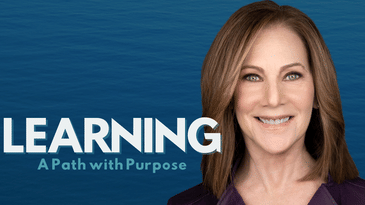
Learning agility is one of the top leadership skills required to succeed today. And yet, where are leaders being taught the skills of learning, relearning, and adapting to changing environments?
Melissa Janis learned early on about her superhero power, the power of learning, and how it helped her open doors to new opportunities and how to influence and impact others.
Melissa learned early on that learning was an outcome of persistence and time, and she has spent her career learning and relearning the importance of learning agility for herself and for the leaders she grows, mentors, and coaches.
In this episode, Melissa answers the following questions:
- How can I learn new skills as a manager?
- What does learning agility mean?
- What training should new managers have?
- Why does training fail for new managers?
My favorite quote from the episode: “To act in a crisis as if you’ve been there before? What a great thing that is. And the way you can get there is being able to learn really, really quickly.”
What I know to be true about the episode: Melissa’s early determination to influence and impact her teachers to demonstrate through persistence and hard work, that she could create new opportunities for herself. It’s those early experiences that led her to experiencing learning agility as a key to success in a changing and challenging world.
What I learned from the episode: The emphasis on relearning and the role that curiosity plays in not only learning something for the first time, but applying that same level of curiosity to the things we perceive to be true to validate that they are still true, or learn that they are no longer true.
Resources mentioned in this episode:
“Learning Agility: The Key to Leader Potential" by David Hoff and Warner Burke https://www.abebooks.com/9780692995365/Learning-Agility-Key-Leader-Potential-0692995366/plp
Melissa Janis Consulting: https://www.melissajanis.com/
Music by Ian Kastner
"What Do You Know To Be True?" is a series of conversations where I speak with interesting people about their special talent or superhero power and the meaningful impact it has on others. The intention is to learn more about their experience with their superhero power, so that we can learn something about the special talent in each of us which allows us to connect more deeply with our purpose.
For more information about the podcast or to check out more episodes, go to: https://whatdoyouknowtobetrue.com/
"What Do You Know To Be True?" is hosted by Roger Kastner, is a production of Three Blue Pens, and is recorded on the ancestral lands of the Duwamish and Suquamish people. To discover the ancestral lands of the indigenous people whose land you may be on, go to: https://native-land.ca/
Transcript The Power of Learning with Melissa Janis
Melissa: I truly believe that learning agility is the meta competency for the 21st century.
Like if there was one thing that leaders at all levels at all levels should embrace and work on to improve and, and thrive today and tomorrow for the future. It's learning agility. It is about being able to learn quickly and flex and flexing based on what you're learning and experimenting and taking personal risks that enable you To adapt to new information.
I think you just commented on my post yesterday about it. Another company that went under because they. You know, we're complacent or they didn't take in new information and, and try to keep, um, growing, you know, it is survival of the fittest and the fittest are learners by and large.
Roger: Hi, I'm Roger Kastner and welcome to the What Do You Know To Be True? podcast. In these conversations, I talk with ordinary people about their extraordinary skill, their superhero power, and the meaningful impact it has on others. The goal is not to try to emulate or hack our way to a new talent. Instead, the intention is to learn more about their experience with their superhero power.
And in doing so, maybe we can learn something about the special talent in each of us that makes us unique. This conversation is with Melissa Janice, and we talk about her superhero power, the power of learning. Melissa believes that learning agility, the ability to learn, relearn and adapt to challenging and changing situations is one of the top leadership skills required today.
In Melissa's experience, she learned that the ability to learn not only helps us adapt to changes. It also has a big impact on how we can influence and have impact on others. If you're ready, let's dive in.
Hello, Melissa. It's good to see you. Thanks for joining me.
Melissa: I'm delighted to be here, Roger. Thanks so much for the invitation.
Roger: Uh, my pleasure. So you and I met on LinkedIn about three or four months ago after we started, I think we both started noticing each other commenting on similar posts and then reacting and commenting on each other's posts and what I, what I really admire about you is how.
Clear and consistent. You are as far as advocating for supporting the toughest job in most organizations. And that's the first time frontline manager. Can you tell us about the work you do and how this topic is big enough to matter to you?
Melissa: Sure. Thank you for that question. It's pretty simple. My goal is to help managers engage their teams and deliver results.
It's as simple as that. And yet it's so hard. It's so hard. And it's harder today than it's ever been. Managers are squished in the middle with demands from the top, needs from the bottom in an environment that is really challenging and constantly changing. Um, I think it was Gartner that just came out with a statistic of 69 percent of employees think their manager has their, the greatest impact on their wellbeing.
More than their significant other, more than their therapist, more than anybody in their life, it's their manager. And so being able to help managers be successful in their roles. Not just helps that person, but it helps everyone that works for them and everyone who lives with the people who work for them.
And so the impact of working with this population of people can be really rewarding.
Roger: Helping people have more meaning, more fulfillment, more, um, engagement and more ability to have an impact at work definitely carries over when they leave work. And so if they can be more fulfilled and more, you know, experiencing thriving at work, they're going to bring that same sense of impact and agency out into the real world, which impacts their family, impacts their friends, the community.
And so by creating a better work environment, I'm with you, we can create a better, better world. As lofty as that might sound, I believe that to be true for sure.
Melissa: But there's something just so exciting about helping people be their best. You see it in the work that you do. You know, you could look at somebody and talk to them and understand where they are, where they want to be, and being able to help them get there, right, to fulfill not just their perceived potential, but their actual aspirations and what they find fulfilling is, you know, really rewarding work.
Roger: And I, I see it in a lot of these conversations in these episodes, and maybe I'm the common thread and I'm reaching out to people who have the same kind of purpose, but it's, but I hear you, this idea of having impact, helping others achieve their potential so they can be more, not only having greater impact, but then also, um, achieving their purpose.
It's so fulfilling. I have a question, uh, for you that I'm, I'm, I'm, I'm interested in hearing your thoughts on this. So James clear in a topic habits sort of repeated this old concept of we don't rise to the level of our goals, but we fall to the level of our systems. And I'm, I'm interested in hearing from you.
Can you put that in context of what you know about the challenges faced by first time managers?
Melissa: Interesting question. I mean, James Clear's book, uh, atomic habits made a real impact. Right. Um, yeah, I think systems are really important and I think about it for new managers and for managers at every level, actually in two ways, one is, and I think the way James Clear talked about it was the systems you put in place to.
Increase your, um, efficiency, effectiveness, right? What do you do, um, routinely that will drive that success, right? Most new managers. Don't benefit from foundational training. If you're, um, among the 40%, that is lucky enough to get some kind of foundational management training. When you're promoted into the role, it's within the first four years of being enrolled.
So many managers are homegrown, figuring it out on their way. And without the benefit of the tools that exist, they're not putting into place the kinds of systems. that might help them be more successful. So it's sort of a double whammy. They don't know the content, but then they're also not baking in something that they're doing routinely to drive their success.
By way of example, I'd say the most effective thing that a manager can do, particularly to drive, um, well being and performance with employees is to have a weekly check in. Not a status update, a weekly check in where we're talking in a meaningful way about how things are going and where your head is at and what you need, that that's the most important thing a manager could do.
And if you had a system where you were checking in 15 to 15 minutes, 30 minutes a week with every employee and checking that off, you would be driving your success as a manager, right? When you ask managers if they're doing that, they say yes, but what they're actually doing is status update. That's the challenge, right?
And then just to finish the thought, the other piece of that is the organizational systems that are in place or not in place to support the manager. Like we know from Kurt Lewin, behavior is a function of the person and the environment. And so not only does this person have to have systems in place, but the organization has to have systems in place to support these managers.
Roger: I have a theory and you probably have the data that supports this or maybe the data needs to go be found. But I would love to see if we followed a dollar spent on leadership development on the upper half of the organization and the impact it has versus that same dollar being invested in that first time manager, you know, your managers, senior managers, directors, what has a bigger impact on the bottom line as well as the well being of the people in the organization.
My, my bet is that that dollar is going to be better spent in the lower half of the organization. And yet, We see routinely organizations putting those dollars in the upper half.
Melissa: It's such an interesting hypothesis. I have not seen data on that. Boy, would I love to see it, right? Because I think you're right in that there is data that supports your point that of the money that is invested in L& D, it is disproportionately invested in senior leaders and in hypos that are on succession plans, right?
And that makes sense. When you're, you have a limited pot and you're saying, this is, this is where we need to spend our money. And, and I would support that to the extent that, um, we need leadership to support investing and role modeling for the more junior managers, right? And so there is. downstream benefit that the managers experience by way of leadership being invested in.
Um, but the balance I think is off and I think that's to your point. So here's my working hypothesis. The money that's spent on new managers is not spent at the right time. Very often what I'm seeing is that the new manager or newer managers or foundational managers, frontline managers, they get invested in.
After they fail, that's when they get a coach and if they've taken that same money, right, and spent it when the person got promoted to make sure that success had been structured for them and that their manager had the tools to continue to coach and support them so that that work was sticky. They wouldn't be paying for coaches on the backend.
Now I don't want to do an end to, um, to the coaching industry. There's a great value, great value in that work. I just wonder that the extent to which management training or any kind of investment in managers is seen as a vitamin instead of, and they wait until it's a painkiller to invest in Them
Roger: Reminds me of the fabled conversation between two leaders at Intel where one is saying, you know, what if we train everyone up and they leave? And, and I believe it's Andy Grove, the CEO who responds with what if we don't train them up and they stay, um, which kind of leads to that same kind of thing as we're setting them up for failure.
And as, as you and I, I think the, you and I have probably put a lot of thumbs up in LinkedIn when it comes to people posting, or maybe our own posts around individuals get promoted in the manager roles because they're high performing, because of performance, because of that, those tactical skills. And then they're get put into manager, management roles.
Um, and they, they really need to have those adaptive skills, that, that leadership, that checking in with people of creating better, um, helping employees become better at what they do. And it's not from those technical skills that got them in that role. So Marshall Goldsmith, what got you here? Won't Like I I'm thinking back to the times when I, you know, was promoted into that manager role.
No one told me. It's not about being an individual contributor now with people reporting to you. It's about the care and affection for the people you're working with. Which got me, which gets me back to that, that first idea that you shared about the manager's role of checking in with people, not checking progress, but really that focus on well being.
And, you know, even before the pandemic, we can't blame the pandemic for this, but it did not help. Higher levels of anxiety, depression, loneliness, um, and, and, you know, it did get worse with, uh, with the pandemic. And so, you know, this focus on well being, Gallup recently came out and said that well being is a precursor to engagement.
And we We believe engagement to be a precursor to performance. So if you want performance, just focusing on performance might not be the best path, but having that sense of focusing on the wellbeing to drive engagement, to drive performance, maybe, maybe there's a path that again, first time managers, where are they going to learn that?
Melissa: And yet, so going back to your question about systems and investment in managers, the knee jerk reaction of most corporations. In during the pandemic, and it's certainly post pandemic to deal with employee. Well, being was to. Offer sessions for employees well, being sessions. Yoga sessions. Mindfulness sessions, all really great stuff, but not the systemic improvement.
Let's look at why people in our workplace are feeling overwhelmed and burned out. Why? Because it's easier to offer, if I'm going to be really cynical, it's easier to offer wellbeing sessions than it is to add headcount, right? or invest in the managers so that they have the skills. to help employees, um, when, um, you know, budgets are tight, staffing is tight, how do we manage And maintain our resilience in this environment.
Roger: I love that. That's the, the your chocolate and my peanut butter coming together, uh, moment of invest in wellbeing, but invest those skills in your managers, invest in resilience, but invest that in your manager. So they can bring that and support their employees that have a need for those. conversations and sense of support when it comes to resilience, adaptability, well being.
Melissa: I just found it personally baffling to send busy, overwhelmed people to sessions. I just didn't get it, you know?
Roger: And now, and now you have to learn yoga and you have to do downward dog in front of your coworkers. Yeah, but you're giving me
Melissa: more to do so I can, you know, relax. Just seemed counterintuitive to me.
Roger: So you've identified your superhero power as the power of learning. Can you share what your superhero power of the power of learning means to you? Sure.
Melissa: Um, it started at a very early age where, um, I think I realized that your standardized scores in school led Teachers and, uh, I guess in your grades let other people to see you in a certain way, and maybe I just didn't test that well, um, but I wanted to be seen differently, and I figured out that if I worked really hard at learning, I could beat expectations and I could be seen more consistently with the way I wanted to be seen.
Roger: That reminds me of the quote, the, you know, hard work beats talent when talent doesn't work hard.
Melissa: And I was ridiculously motivated to this day, ridiculously motivated, very high need for achievement. I was fortunate to have some really wonderful teachers who Saw that, right? Um, but it was very internally motivated.
Part of it was I just loved to learn. It wasn't necessarily about getting grades. I loved understanding these concepts and seeing things that I didn't understand and making them understandable and relating them to other things I knew. I guess what I found as, um, initially was that a grade was simply a function of time.
Like, if I had enough time, I could get an A. It might be a ton of time, okay, depending on the topic, but it was really, a grade was a function of time, and then, as you get to college, there's never enough time, so you have to get smart about it, and so I became a really good learner, I understood how to get stuff into my head, and to be able to articulate it, By being more efficient, I still studied.
I mean, if you talk to anybody I went to college with, they never saw me until midnight. And so I got really, really good at, um, figuring out what the instructor was looking for. I got really good at looking how, at how a chapter was set up and figuring out what was going to be important. So much so that I was actually almost brought up on disciplinary charges.
in college as an undergraduate for cheating because my roommate and I totally happened. My roommate and I were psych majors and taking physiological psychology as a requirement along with physical therapy majors who were required to take the class. And as you might imagine, the instructor was, um, had the experience of physical therapy majors doing really well in physiological psychology.
And psych majors, not so much, but my roommate and I were very good students. We studied like crazy for this exam. And I was so good at figuring out what would be on tests and what would not be on tests that I made the error of missing a concept that was worth four points. So the two of us took the essay exam sitting next to one another.
We missed the same concept, but anything we had studied, we had And we both got a 96. On in an essay exam, so he assumed we cheated and so I proved my innocence like an N. C. I. S. episode by showing him that I sat to her right and I was writing on a righty desk and I'm left handed because, you know, it's always the lefty and I had to turn around to write.
So my back was to her and covering my paper and it was physically impossible for us to have cheated. I don't know how you cheat on an essay exam anyway, but that's how I proved my innocence. But just to say, I got really good at figuring out what's the signal through the noise? What's important, right?
And that was the precursor to where I am today. How I think about learning is really about learning agility. It's hearing the signal through the noise. It's recognizing patterns so you can figure out how to move forward.
Roger: Your story reminds me of when I was in college, I'm taking a macroeconomics class.
And for some reason, I'm actually digging it. I love it because it's sort of systems thinking, right? Without, without, um, without the hard math. And so, um, it's probably why I ended up in political science. But anyway, um, In, in this class, uh, with a couple of friends who were struggling after the midterm, I sort of mentored them.
I would be sharing, um, what I knew about the material and how I thought about it. And we go into the final, and this is back in the old day with the blue books and whatnot, and we have our colored pens, drawing graphs and whatnot. It was, it was a lot of fun. Afterwards, I'm checking in with my, uh, with my colleagues and they are really excited that they felt like, you know, what, what was really difficult for them was something that they were able to express and answer, uh, in that final to a where, to a level where they thought they did really well.
Um, and then a week later, the grades come out and my, my, my, my, my, the students that I mentored, they got A's, on the final and I got a B plus. And I'm wondering, how's this possible? So I go, I go and see the instructor and I asked them like, what's going on here? Like, you knew I was mentoring these people and you knew that I was, um, that I was, you know, I, I knew this topic and I, I don't know how the people who I, you know, I co taught with you get the A and I get the B plus.
And he looks at me and he says, you could have done better.
And I think about that and everyone I tell the story is like, that doesn't sound fair and it might not be fair, but what it did for me was I did have a higher potential than the students that I mentored. And that was that actually, I think has been a, um, pivotal moment in my, my feeling about learning and how I look at learning about it, not being a static thing.
Although grades should, you know, rubrics and whatnot should be pretty static, but. you know, the idea that one student has a higher potential than another and teach to the potential, not teach to the, you know, that standard or that rubric. I actually had a really, um, uh, strong sense of, of appreciation for that.
And I think that has been something that has really guided me in my own direction when it comes to my learning, as well as helping others through learning. If I was your coachee or your first time manager, who's having challenges, learning, leaning into that growth area because of an attitude issue. What, what would you do to help me?
Melissa: So a couple of thoughts. One is just because we understand that we're going outside our comfort zone with our head doesn't mean our heart came along.
Roger: Right?
Melissa: And so that frustration of things not working, right? Um, I have come to embrace that as part of the process of learning. Part of the answer is that understanding the value in the struggle, the stuff that comes easy.
Isn't real growth. It's just like improvement, but the real demonstrable growth is when you work through it and come out the other side with something that you weren't able to do before. Right now, for new managers or managers or leaders at any level. I have dealt with leaders at all levels who don't think it's necessary to have.
Meaningful conversations with employees beyond status updates. I've dealt with pretty senior leaders who never met with their direct reports, but at the end of the day, if somebody doesn't really see value in whatever you think would be valuable for them, it's about asking coaching questions and helping them.
See the value give you a great example. I have a dear friend who is very senior in an organization and The president's office was on the way to her office and she reported directly to the president of the company And she was very frustrated because every day when she came in she'd walk past the president's office And the president would call her in and chitchat for half an hour and she just wanted to get her work done.
She's like, I get in early. I want to get to my desk and I just want to sit down and get going. And I waste a half an hour every day with my boss. Okay. So this one's easy, right? You know where I'm going to go with this. And I said, so your first task every day is to kill a half an hour with your boss. And when you sit down at your desk, you can tick that off that you did that.
And once it became a task, she was totally okay with it. But it had to be seen as a task, right? And we could talk all day long about trying to influence your boss and how would you use that time to maybe pitch what you're looking for, the value of building that relationship, but she was so task driven that it needed to be framed in a way that she could accept it.
Roger: When you're looking at, um, helping your clients or helping your coaches with, um, when you're sharing your. The, the power of learning. What's the framework of the process that you follow?
Melissa: Oh, that's a great question. So I actually have two different frameworks. I work individually with new managers as they get promoted into management, or they're a new manager by virtue of joining a new organization.
My framework for that is my leader launch 90. Program, and it's basically, uh, several steps around helping people accelerate their learning and then accelerating their impact. And so what it guides leaders to do new managers to do is to approach their new remit in the organization and their new team in a way that allows for working hypotheses.
So, and it builds in systematically, to your point about James Clear, some really good habits around taking in all that information at the beginning, you know, that, that fire hose 90 days worth of information, well, a lot of it drips out. We don't capture all that water, right? And so how do we take that information in, process it and synthesize it for meaning so we can create working hypotheses.
That then allow us to be really planful and, uh, intentional so that enables those quick wins and ultimately reflection back the finished cycle is reflecting back and iterating. I've also created a framework to work in cohorts. Um, and this is kind of interesting. I think you'll find my goal is to work one to one with.
People as they were making this transition. And I wasn't even calling it coaching. I call it personal training, right? Because I'm going to train concepts in the moment. So while I have this framework, it's flexible for whatever, you know, they're whatever fire they're fighting in the moment. So that it's really relevant and impactful.
And yet I'm getting a lot of inquiries for courses, but I won't do them unless they have a personalized component, because that's, you know, that's What I do. So I'm not doing scalable training. I'll take on a cohort and for managers in smaller companies where they don't have any training at all. And they're looking to have a more consistent employee experience with managers who are skilled, um, you know, in the fundamentals.
And so that's all about people environment and, uh, the performance management process.
Roger: If the opportunity is to do training without a personal component, um, why do you say no to those?
Melissa: I've done more than my fair share of webinars for 500 people at a time. Right? And they're really fun and they're exciting and I'm evangelizing all my, uh, hopefully good ideas that will help everybody go and do differently.
Um, they're not sticky and I'm looking for real change, right? At this stage of my career, what I'm really looking to do is to make an impact. To me, that's, that's my legacy. This is what I can give back. And so doing it on a smaller scale, who's looking after these smaller companies? Where? There are homegrown managers who are doing the best they can.
And really it won't take much to help them get a really big boost. The reason why I decided to focus specifically on the new manager one to one was because I found that, um, disproportionately, even when training is available for managers, fundamental manager training, when that's available for managers, you know, who doesn't go the high stakes manager.
And it's more often than not, at least, you know, my anecdotal evidence, people in STEM functions, that they promote the top engineer to run the engineering team. He's not going to training, and if he does, he's going to turn his camera off and he's going to keep coding, right? And by the way, it usually is a he, but it could be a she.
So, um, so I thought that's a person who would really benefit from a one to one experience that was tailor made and tightly focused on what they needed to learn. So the what's in it for them was really high, and they weren't wasting any time learning things they didn't need. You can really move the needle.
Roger: The, the theme I'm pulling from this is the power of learning. Must include an approach that speaks to both the heart and the head. And in a webinar with 500 people, it's really hard to connect with the hearts of 500 people.
Melissa: Yeah, I think
Roger: that's fair. The whole approach to learning where it's really based on the instructor's availability and their time, what's convenient for them and not the students.
Like, you know, you're, you're learning a skill that you may not use for six months or six weeks or six days. Um, and yet it's the application and, and learning reflection and then trying it again. And that, that sort of, that grind that we need. That's exactly what
Melissa: ran through my head. That was exactly it, right?
That when you look at curriculum for new managers, and sometimes they go cradle to grave, so it starts with hiring people. And I go, why would the program start with hiring people? Like, that's, that's the employee life cycle, but if you don't have any open positions, you don't need to know this. Hiring should be just in time delivery, right?
And so, you know, to your point, it's about making it incredibly relevant and practical. And I think that's one of the reasons why early on, I was making a decision when I went back to school in my late thirties and, and earn my master's at Columbia. I was debating if I was going to go back to be a social studies teacher or move into corporate training.
And I decided. That corporate training was the route because what I love about learning is being able to do something with it. It wasn't, and I love social studies and I loved having conversations about it, but even more so was being able to help people do better. And so one of the challenges that we have, and particularly when you're delivering, um, large scale webinars, is Or even webinars without more of design around it to support the stickiness of the training is that we grow the knowing doing gap.
So people say, I've heard this concept before. I know this right? I know it. Right? And so, um, I have been known to open my sessions with you may not hear anything new. I may not tell you today anything you have not heard before. But before you decide to let me know that, I'm going to challenge you to ask yourself, are you doing it consistently?
Because if you understand the importance of feedback and you've heard how to give feedback, but you never give it, it's the same as not knowing how
it's about the doing.
Roger: I'd love to hear what's the impact on you when you've successfully used your superhero power of the power of learning.
Melissa: Oh, that is just. the best. I mean, really selfishly. It's about, uh, you know, setting off those light bulbs for other people. Right. And when they've got it, it just feels great.
It's just, that's what it is. It just feels really good. You know, their success is my success.
Roger: What you're doing is helping people through learning, um, not only, um, shrink that knowing doing gap, connecting heart and head to be able to not only achieve their goals, but hopefully actually exceed those goals in a way where in doing so helps them get to that purpose, help them have, you know, a greater sense of agency and achievement, which You know, uh, enables them to thrive in the workplace.
And as we talked about before, if you can get people to thrive in the workplace, they're probably going to thrive in their communities. What is the relationship between your superhero power and your purpose?
Melissa: Oh my gosh. It's the same thing. It's
Roger: really one
Melissa: in the same. I am an inveterate learner. Like it is, like it is who I am.
In fact, uh, finally years ago, I took the CliftonStrengths assessment. Right. The strains finder. And if you ever wanted to validate it, learner was number one, achiever was number two, and I was like, why did I even bother to like, it was so, so obvious, um, I was like, well, I guess this works, uh, sample size of one.
It's accurate. Um, it, it's really who I am. What's really important is being able to synthesize. and glean new insights from the information that you're getting. And that's why learning agility is so important now, because there is so much information out there that being able to take in information, figure out what's important, how it relates to other things to inform what you're going to do next may seem daunting.
And I know you felt really challenged by some of these. And at the same time, um, it's the nature of the beast of living in a world. That's constantly changing. We very often don't know what to do next. And so being able to. Look at a situation and know how to act, particularly in a crisis, like you've never, like, act in a crisis as if you've been there before, what a great thing that is, right?
And the way you can get there is being able to learn really, really quickly. One aspect of this that we haven't, um, really addressed directly is curiosity, right? I mean, Let's bring Ted Lasso in for a moment, right? This all starts with curiosity. Like, you have to be curious. So, otherwise, if you're not curious and you're taking in the information, then you just take what you have and you move forward.
That additional meaning comes from being curious, curious enough to tease it apart and say, in what shape will this work? or will it work if I bolt this onto it? Or will it work better if I take this away from it? How does this, what are the working hypotheses here? And then how do we, um, come up with what we think will work and test that and, you know, continue that process.
Roger: Right. What do you know to be true about the power of learning?
Melissa: I truly believe that learning agility is the meta competency for the 21st century.
Roger: Hmm.
Melissa: If there was one thing. That leaders at all levels at all levels should embrace and work on to improve and and thrive today and tomorrow for the future.
It's learning agility. It is about. Being able to learn quickly and flex and flexing based on what you're learning and experimenting and taking personal risks that enable you to adapt to new information. I think you just commented on my post yesterday about it, another company that went under because they, you know, were complacent or they didn't take in new information and, and try to keep, um, growing, you know, it is survival of the Fittest are learners by and large.
So, um, and in fact, if your listeners are interested, a really, really great model for this is, uh, professor Warner Burks and not because he was my professor, um, at Columbia, but because I do believe he has the best model out there for it, and I'll give you the link for the show notes. Um, it is a learning agility model of nine elements.
And it's not just reliable and, uh, valid from a, an empirical standpoint, but what I love about it is very practical. I'd also say that it's important to understand that learning is no longer a nice to have. Learning is a strategic imperative, you know, in the old days, you got your degree, you did the job, you didn't have to learn anymore.
You just waited for the person above you to move on and you got promoted. Um, Transcripts That job is going to be different by the time you move into it, or maybe next year there are new jobs based on new technologies and changes in the marketplace, and nobody has the full skill set and your ability to close the gap between the existing skill set and what is needed for this new role.
I mean, think about it. Five years ago, I'm pretty sure I wasn't saving posts on how to write prompts for chat GBT, right? Ten years ago, fifteen years ago, there's no such thing as a social media person. And yet these roles popped up. So who moves into those roles? People who have adjacent skills and can learn really fast to close the gap, right?
Those are the people who get the opportunities. The other thing I would add is that we've got to move away from learning as an event. People think. That they're not getting invested in unless they are sent off to training for the day. But real learning happens every day. The problem is we don't capture it, so we're not aware of it.
So I very often recommend to people if they feel they're not getting invested in, at the end of every day, write down the thing you learned. Or at least at the end of the week, reflect back. What'd you learn? I was dumbstruck. Years ago, I had an intern who decided to do this on her own. And I didn't, unbeknownst to me, right?
She's there for 10 weeks and on our last day, we sat down to have our little closing conversation and sent her on her way and she presented me with a three page document, single spaced of all the things I taught her because she wrote them down.
Roger: What a gift. She
Melissa: walked away going, I learned a lot. I learned three pages worth of stuff.
Right. And so we're not aware of all the little things that we're learning and how those build up. Pretty sure James Clear would subscribe to that approach.
Roger: Yeah. That's, that's the 1 percent getting better 1 percent every day.
Melissa: Yeah. We learned from experience anyway. I mean, that's how we learn best is by taking it in and applying it and doing it and practicing the doing.
And yet we don't think that's learning because there wasn't like a fee. Yeah. Right. Absolutely. and a day away from the office.
Roger: So there's this concept of 70 20 10 in, in learning theories. And that's 70 percent doing, 20%, um, making meaning, being mentored, being, um, trying to understand how you apply learning.
And then 10 percent is, uh, formal training, something in the classroom. Do you subscribe to the concept of 70 20 10?
Melissa: Great question. So it depends on how it's used. I'm going to give you, it depends on that one.
Roger: That's fine.
Melissa: So, so I, I subscribe to the notion that you should do some formal learning. You should spend more time than that.
In social interactions about it, whether you're, um, in peer group conversations, talking about it ad hoc, getting feedback, but that I do believe learning is a social activity and then the vast proportion of time, um, spent actually learning. Practicing that task, right? And reflecting on it, maybe back with other people.
Um, because it doesn't work if you don't reflect, right? Um, where I've had trouble with it is when, um, it's positioned sort of as an excuse for not providing resources to employees that they, the company only has to provide. The 10 percent because you're supposed to be doing the 90 percent on your own.
Roger: So,
Melissa: you know,
Roger: it's a way to cut learning budgets by 90 percent because it should only be 10 percent of training.
Melissa: Right. You follow me? And so, you know, like anything else, it, it depends on how it's used. I don't think that it's about the exact percentages. I think it's simply about the concept of focus mostly on the doing. I mean, that's the point about the knowing doing gap. If you're focusing mostly on the application and then taking a good look in the mirror at night and saying, how did I do today?
You know, I did this in the meeting. I think this was effective in drawing this person out, but I could have done more with this person. So I'm going to try that next time. That's how you get demonstrably better quicker, right? It's. The course, the book, the webinar, the podcast, if you will, whatever it is that you're listening to for formal learning is simply to give you that idea, that concept of try this, then you actually have to do it, right?
And it's the trying and fitting it on for size. For how it works best for you and your team in your context, that matters. Um, I, I think I'd end, I'd end that, that, that segment with this notion that believing that you have all the right answers is the sure path to failure.
Roger: Hmm. Mm hmm.
Melissa: Right. It used to be, you know, you had to know all the answers, the person who had all the answers and, and you, you, by virtue of a title, you now effectively have all the answers and that's a very dangerous way to go when things are changing really quickly.
Um, it's really important to get the benefit of different perspectives. I mean, this whole backlash on DEI is mind boggling to me because. That's so integral to success for an organization. I mean, talk about a what's in it for me argument, right? If you want to be able to see around corners of what's coming next, wouldn't it be cool to have people who are standing in different places who can get a different view around that
Roger: corner?
Melissa: So, um, we need to be able to not just take in information from lots of diverse perspectives and value those. But then be willing to admit that we don't know and be vulnerable, like these are key parts to learning and then shaping an answer for, um, really great decision making.
Roger: So, what did you used to think is true about the power of learning, but have come to realize maybe is no longer true for you?
Melissa: Uh, I, I originally conceptualized learning or the power of learning to be something internal, that it was something that could enable me or any other person to exceed their expectations, right? That it was, it was the tool by which, um, you could change how people saw you. And what I've come to really appreciate is it's really a leadership skill.
It really is. It's about. demonstrating behaviors that enable other people to rise that role model, the kinds of behaviors that help other people that lead to good decision making, right? These are, you know, when you, when you are a good learner and you're willing to be vulnerable and here's your heart piece, I know you really want to talk about the heart, right?
If you're willing to be vulnerable in the service of doing better, of learning more, of achieving better outcomes, of, um, stretching into, unfamiliar territory and not being freaked out by it and putting up barriers, but instead leaning in and saying, are there, is there opportunity here? How can we leverage this?
Where are our strengths and how can they play out here? Um, those are learning skills. Right, but they translate to good leadership.
Roger: Okay, Melissa, this has been a really wonderful conversation, powerful conversation. I've enjoyed it immensely, uh, but it probably does need to wind down a little bit and we never, it has to end.
You and I will continue on, um, having conversations, but for this episode, yes, I'm sorry, but we're going to end with lightning round. Are you ready? Sure. Fill in the blank. The power of learning is
Melissa: everything.
Roger: Who in your life provides the power of learning for you?
Melissa: Me.
Roger: Is there a practice or routine that helps you grow, nurture, or renew your ability to help others with the power of learning?
Melissa: Oh, I think there's many. There's many. So there are things that I do so that I make sure that I have reflection time, um, that I have time to take in new information. I have my own 70, 20, 10, I guess I would say.
Roger: So what is one thing that gets in your way of the power of learning?
Melissa: Hmm. Time, time
Roger: will
Roger: always
Melissa: be the, the, uh, the foil, right?
How much time do you have? How are you going to spend it? Where, where are you investing? Yeah, with limitless time, um, you know, you can keep absorbing, right? Um, but, uh, you know, work sometimes gets in the way.
Roger: Life.
Melissa: Yeah. Yeah. But that's why it's so important to integrate it into what you're actually doing.
Roger: Hmm. So what word or phrase describes what the power of learning feels like when it's had a positive impact?
Melissa: Hmm. Fulfilling.
Roger: Mm hmm.
Melissa: It's really fulfilling. There's nothing better. Than answering Final Jeopardy correctly and all the contestants got it wrong It's that feeling
Roger: If a listener wanted to ask you a question or follow up with you, where do you want to point them to?
Melissa: Oh, I would welcome that. Please, please, please reach out to me. Uh, connect with me on LinkedIn. Um, or you can visit me at melissajanis. com. Um, got a really good ebook there that I had mentioned about the stats. There's other stats in there your listeners may find of interest and they can download it from there as well.
Roger: Well, Melissa, thank you. This is everything I had hoped it to be. It only wants me to have the next conversation in the next conversation with you, because I think we achieve, you know, peak geek when it comes to, uh, helping others achieve their potential. Um, and, and we both have this affinity and affection towards really empowering and equipping first time managers because there's so much opportunity for growth and impact for the broader organization.
More people report to first time managers or frontline managers than anyone else in the organization. Such an opportunity for helping people achieve their purpose and potential. And I know we have that in common. So again, it's been an absolute privilege and pleasure to talk with you. Thank you so much for, uh, for joining me on the podcast and bringing it today.
Melissa: Oh, thank you so much for having me. This was so much fun. Let's talk again soon. And, uh, I hope your listeners really enjoyed the conversation.
Roger: I'm sure they did. Thank you so much. Bye bye.
Thank you, Melissa, for sharing your expertise and experience with learning agility. Thank you for being a champion of that first time manager. Thank you for sharing your purpose of the power of learning with us. The question I'm reflecting on after this conversation is what is my learning edge with my superhero power, and what are the areas of learning agility that I can lean into that will enable me to better grow and adapt my environment?
Okay, if you like this episode, please do me a favor and share it with one other person. Thank you for doing that. What do you know to be true is a Three Blue Pens production. I'm your host, Roger Kastner. We are recording on the ancestral lands of the Duwamish and Suquamish people. To discover the ancestral lands of the Indigenous people whose land you may be on, go to native lands.
Okay, be well my friends