
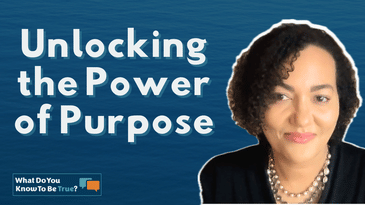
The power of purpose transcends fear, fuels joy, accelerates growth, and gives us a reason to rise, says Purpose expert Anna Hall. And her purpose is driven by a strong, innate sense of fairness.
Nowhere is it written that life is fair. However, fairness is our barometer for how we fit into the systems and context we survive or thrive in.
Anna Hall is a beacon of warmth, authenticity, humanity, and vulnerability. She is a powerhouse of energy when it comes to teaching people about discovering their purpose.
The source of her energy?
It’s an undeniable and powerful sense of fairness.
Anna is an expert in helping others find and live into their purpose.
With over 50% of people searching for their purpose, we need people like Anna Hall to help us discover that it’s not something that needs to be found but re-discovered.
Anna believes that our purpose is like our immunity system: it’s totally unique to us and that we are born with it and it is revealed through life’s experiences.
Anna shares that not only are we better when we individually live into our purpose and treat others with fairness, but that we are collectively better when more of us live into our purpose, and treat ourself with fairness.
Through the stories she shares, the work she performs, and the energy she radiates, Anna is a role model for living into purpose.
In this episode, Anna answers the following questions:
- What is the meaning of fairness?
- How do we find our purpose?
- What is the role of joy in purpose?
- How does purpose help conquer fear?
And then there’s joy fuel. It’s like rocket fuel, same boost of power, but smells a lot better.
My favorite quote from the episode: “When I get in touch with my purpose, that is how I move through fear.”
What I know to be true about the episode: It is such a privilege to witness Anna's energy and strength in conviction in everything she says about joy, purpose, and fairness.
What I learned from the episode: I learn so much from Anna each time we talk, but today's top learning: purpose is the anecdote for fear.
Links to resources mentioned in this episode can be found at the episode page at https://whatdoyouknowtobetrue.com/video-episodes:
- Anna’s company: The Purpose Equation: https://thepurposeequation.com/
- Book: “Five Stages of the Soul" by Harvey Moody
"What Do You Know To Be True?" is a series of conversations where I speak with interesting people about their special talent or superhero power and the meaningful impact it has on others. The intention is to learn more about their experience with their superhero power, so that we can learn something about the special talent in each of us which allows us to connect more deeply with our purpose.
For more information about the podcast or to check out more episodes, go to: https://whatdoyouknowtobetrue.com/
"What Do You Know To Be True?" is hosted by Roger Kastner, is a production of Three Blue Pens, and is recorded on the ancestral lands of the Duwamish and Suquamish people. To discover the ancestral lands of the indigenous people whose land you may be on, go to: https://native-land.ca/
ABOUT THE PODCAST
Charting a path to purpose starts with a deeper understanding of one’s superhero power and how to make a meaningful impact in service of others.
This podcast is for anyone who helps other people unlock their challenges and achieve their potential. Our audience wants to think deeply about their work and how to increase the positive impact it has in service of others.
The goal of these conversations is not to try to emulate it or “hack” our way to a new talent. Instead, the intention is to learn more about their experiences with their superhero power, and in doing so maybe learn something about the special talent in each of us that makes us unique.
Our guests bring humility, insights, gratitude, and humor as they delve deep into their experiences, learnings, and impact their "superhero power" has had when used successfully.
The path to purpose: Ordinary people, extraordinary talent, meaningful impact in the service of others.
Fairness with Anna Hall - Transcript
Roger: So purpose could be the anecdote to fear.
Anna: Absolutely. Oh, I love that. Absolutely it is. When I get in touch with my purpose, that's how I move through fear. In fact, I look for fear now. I've fallen in love with fear. Not fear of trauma or harm, but when I'm afraid to try to try something new or I'm afraid to make a mistake or I'm afraid to go out of my comfort zone, I say, thank you, fear.
Let's go. Hold my hand. I'm acknowledging you. But you're telling me that I have an opportunity to grow and that's what I want to do.
Roger: Hi, I'm Roger Kastner and welcome to the What Do You Know To Be True podcast. In these conversations, I talk with ordinary people about their extraordinary talent, their superhero power, and the meaningful impact it has on others. The goal is not to try to emulate or hack our way to new talent, Instead, the intention is to learn more about their experience with their superhero power so that maybe we can learn something about the special talent in each of us that makes us unique.
This conversation is with Anna Hall and it's about her superhero power of fairness. Anna is an expert in helping others find and live into their purpose. Through the story she shares, the work she performs, and the energy she radiates, Anna is a role model for living into purpose. The source for her energy?
It's an undeniable and powerful sense of fairness. She says not only are we better when we individually live into our purpose and treat others with fairness, but that we are collectively better when more of us live into our purpose, and treat ourselves with fairness. If you're ready, let's dive in.
Hi, Anna. Welcome to the podcast.
Anna: I am so honored and excited to be on your podcast. Thank you for having me.
Roger: My pleasure. It's always joyful to be with you. And I use that word joy intentionally because it's true. And it's central to how you talk about purpose. It is. I'll give you that. Can you share what we should know about Anna Hall and why joy is so important in the role of your superhero power and purpose.
Anna: Absolutely. So in my world, and I try to help everybody enter this world, joy is the human emotion and state of being that fuels our ability to have energy to exchange purpose. So I actually call it joy fuel. And the cool thing about joy is that we all have access to it all the time, even in the midst of grief and sadness.
That's why I love joy so much, because it really can exist. Always, we always can be joyful if we're aware
Roger: I love the idea that we could have two, two feelings at the same time, and especially, you know, as, as we are going through the holidays with everything that was going on in the world, it seemed, it seemed hard for people to access joy during the holidays.
Um, but the, this idea that we can hold both joy and grief at the same time is, is really powerful. What do you. What do you do when you want to be able to access joy when you might be feeling something that feels like a like a polar opposite?
Anna: I love my work and I can be a workaholic a little bit, but when I noticed that it's starting to take me longer to accomplish things that usually I can just do it, get done, or I feel like I'm kind of sludging through, I realize my joy fuel tank has gotten low. And so for me, my main way of accessing joy is to rest my mind, body, and spirit all at the same time. Interestingly enough, the way I do that is by dancing around my house, listening to my favorite music and singing out loud because that allows my brain to take a break from what I'm thinking about and what I'm focusing on, what I'm planning, which is part of my personality.
And it allows me to take a deep breath and refresh and refuel. And that's really what joy fuel does. It helps us fill back that tank.
Roger: You reminded me of my grandmother who a number of years ago had a stroke and she was having a hard time, uh, with the speech center of her brain and the doctors were telling her or the therapists were telling her to try to sing.
What she wanted to say and the ideas that are the speech center and the part of our brain that actually helps us seeing are two different parts of the brain. So it makes a lot of sense to me that when you want to rest one part of your brain, you access another part of your brain as you go around and sing and the power of music.
There is something about music being such a mood uplifter. That when I'm feeling down, when I'm feeling stressed and I turn on my, my, you know, my, my new wave eighties, uh, playlist, like I am in, like, I can't, like, I could try to fight it, but there's no way for some reason, you know, you two, the cure, all these bands are going to just bring me, bring my mood up.
Anna: Absolutely. Music is amazing for lifting mood and it activates more parts of the brain than almost anything else in the world. Oh, in my career, I've spent 25 years in the senior living space focusing on programming and engagement and what makes quality of life and music is quintessential to the human experience.
And even people living with end stages of Alzheimer's disease and other progressive brain disorders can sing and hum. And listen to music when they've lost the ability to speak, it's powerful.
Roger: And one of the things that, um, really, really excited me about when we started connecting was the work that you do around purpose.
Um, but in the context in which you're doing a lot of your work around purpose was really, um, something I had not thought of. I've been thinking about purpose as a way of motivating us to really like find the vocation, find the work that drives. You know, a lot of fulfillment and achievement in the work by living into our purpose.
And yet you're, you're focusing in a different space altogether. And I'd love to hear you talk a little bit more about it because you can speak so much more eloquently about it, but the idea of working in, uh, working with seniors, working with people who are no longer working, and helping them tap into their purpose. And it's just so meaningful. So tell us a little bit more about the work that you do.
Anna: Well, the first thing I'm going to say might be controversial in the world of purpose, but I stand by it a hundred percent because I have had purpose guides who are in their 80s, 90s, a hundred plus, and I have come to see through hundreds of purpose equations that purpose is not.
A goal or a role a lot of even researchers, researchers and academics talk about purpose as goal orientation. And I think for some people, that's true based on their personality, but really purpose is how we innately. Give and get meaning and joy every single day. And our society says, well, the way you do that is through work.
And that is not true. I think that work is 1 way for people to channel their purpose. And now look, people who are connected with their innate purpose and channel it through work. Are more productive, more efficient. They love their work more. They're more engaged at work for employers. You want your people to be engaged at work.
Cause they're more likely to stay and go above and beyond and be healthier. But purpose is not about work. Purpose is to answer your question. Now, who we are born as, who we are as a being without doing anything. And then because we know who we are and we understand. Through our purpose, what our innate operating system is and how we perceive the world, because we're all having our own experience.
You and I are on this podcast podcast together, having totally different experiences because of how we intake and synthesize. and experiences. So knowing how we then experience the world informs how we bring our purpose to work, how we bring our purpose to reaching goals and living our life.
Roger: I love how you elevate this concept of purpose because I think I might have been in that trap of thinking about purpose.
Yeah, I. I think of it, not necessarily as the goal, but definitely the fuel for the goal. But so much of what I've done, um, in thinking about purpose is oriented towards work, is oriented towards, you know, achieving things around work. And even some of the work I've done as a, as a volunteer or as a youth sports coach, it, it feels like it's all connected towards.
Yeah, like helping fuel achievement, um, and not thinking about it, like, you know, I'm, I might be working for another 10, 15 years and then like, I, yeah, I probably don't. There's part of me that doesn't want to think about what happens next, but I, I guess I've, you know, until we started talking, I never thought about, like, purpose will continue.
It will be with me. It will be part of my system, even though I might not be pulling down a paycheck. And that's, it's somewhat, somewhat scary.
Anna: Be very grateful for that fact, because when you know your purpose and you retire, which by the way, I don't like that word retire because retirement means withdrawal from something.
And then what I like the word transition. We have many transitions in life, but it implies we're moving from one thing to another, which is what. Moving out of the work world and into other ways of sharing our purpose. is really about, but when our purpose is connected to our identity and our status, which is what our society does.
So what I'm saying is a hard thing for a lot of people. But what I do with older adults is I say, let's look at your achievements. Let's look at your roles and goals and your jobs and see what you can do. What were the threads that that motivated you to achieve things? Those things are innate to you. You can't help it.
And they certainly helped you be successful in what you've been doing. We can take those same threads and apply them to infinite possibilities. And your life now, and that's where people feel liberated. And that's your word, which is what's on my mind. But when I, we were, when we were talking earlier and you said this word, you know, liberation resonates, you talk about coaching, teaching, organizational development, a podcast about superpowers, the thread of everything that you're doing, and that motivates you to achieve is that underlying sense.
Of helping people to be free.
Roger: There's a book called “Thanks for the Feedback.” It talks about some of the perils of providing feedback. And one of those perils is that so much of what we're trying to do, the stories that we tell ourselves about the things that we're trying to do is tied up in our identity and we will label our identity in nouns.
Like I am an organizational development practitioner. I am a podcast host. I am a father, whatever those labels are. And when we get feedback about that, that tells us that maybe we fell short of our goals that, you know, some, something happens inside between the ears where we start thinking, okay, well, well.
Am I actually an organizational development practitioner? Am I, am I a podcaster? Am I a good father? And it's, you know, feedback is just that data. Really the trap is by placing those labels as nouns versus making those labels as verbs, that this is part of a process. Like I, you know, instead of, you know, Being an organizational development practitioner.
I am someone who tries to unlock the barriers that teams and leaders run into achieve, you know, in achieving their goals, or I, you know, instead of being a podcaster, you know, I am using this medium to help people share their path to purpose. So others may learn and be inspired from it. And then when I get feedback, like, okay, this video is not performing really well, or, you know, this, this episode is not as interesting as the other ones.
It's just part of the process, rather than, you know, that, that feedback being a statement of whether or not I have achieved this. And I'm pulling up this, this whole idea, because again, Purpose, as you said, is not a goal, it's part of the process, it is the context in which you do these things and therefore to where we started on this topic, once you transition from getting a paycheck to not getting a paycheck, you can still, um, you can still live with, with your purpose.
Anna: In fact, you might be able to share even more of your purpose because now you're not constrained in a nine to five or more about having to channel so much of your purpose through one pathway. There's a lot of research out there that shows that even retirement is often a time where people do go more inside and do a lot.
Of personal growth and learning, and they, they dive into their spiritual life. Part of what I do with helping people discover their purpose is to update that story. And that's based in a psychological theory called narrative identity. So people think in words and those words string together into stories and the story that we tell ourselves about ourself.
Is the most powerful story of our life. And we need to ask ourselves this question, does this story serve me? And when we base our identity on a temporary thing and an external thing, like roles and goals. We're setting ourselves up for running into roadblocks and getting stuck. So, part of what attracts me to your podcast is this conversation about superpowers.
I use superpowers from positive psychology to help people reconstruct a narrative that's true, that's based on evidence of their whole life. Around natural strengths that are so innate, they might not have even noticed them before, but they really do inform how they move through every realm of life. And that gives us cognitive flexibility to be able to adapt this story to any situation.
And know who we are and know the next step to take.
Roger: Well, I want to hear about the purpose equation. So your company is called the purpose equation. Could you walk us through the purpose equation and its components?
Anna: Yeah. I wanted to build an equation because I spent 20 years working with older adults in the senior living world where there was an acceptance of the fact that purpose is important.
But again, it's very vague. What does meaning and direction and goal orientation actually mean? So I reached a point where I was sitting under the redwoods in California one day visiting my sister and I was thinking about it's so vague. What does it mean? Because all the research says that people who are connected with their purpose live seven years longer, recover faster from illness.
Less likely to have a heart attack, less likely to have a stroke, like all of these tangible results of this vague thing. And it frustrated me. And I'll tell you why it frustrated me a little bit later, but the equation is the result of years of purpose guides who blessed my life, showing me the power of purpose.
Like, when I was in college, I needed to earn some money. I worked as a personal care assistant. For a man named Alan, who was working as a lawyer, he was head of this disability services at Boston University, powerhouse of a man. I mean, he ran this department. He was an advocate. He was a lawyer. He was doing speeches for organizations around the world.
He was living with muscular dystrophy. When I met him, he could move one finger, enough to power and his, his electric wheelchair. So my job was to meet him at his house in the morning, help him with all personal care, showering, dressing, everything, suction his lungs because he had lost the muscles. to be able to keep lungs clear, uh, connect him to his oxygen machine and then go to work with him, feed him during the day.
And he would get so frustrated with me, yell at me. It was hard. I was 19, but then we would have these conversations about how his mind knew exactly what he wanted to do and what he wanted to say. And it was so frustrating. Frustrating for him that he couldn't move his body. And then we would talk about the law and then I would watch him at work, working his magic, helping people all ages, all stages of life.
And I thought, wow, this man is here because he has a sense of purpose. He was 35 when I met him, which was. Eight years past his life expectancy, given the status of his muscular dystrophy. So that was my first entree into purpose. So back to the Redwood trees and the purpose equation, it reached the point where the calling was so strong.
I said, I'm going to figure this out. So I quit my job. And I did a year of research and I started with wondering about motivation. Why is it that some people get out of bed and go through their day when it seems like life could be too hard, insurmountable and others seem to give up. In senior living, we used to call that failure to thrive, just giving up.
So I started with motivation and I went down all the rabbit holes of self determination theory and positive psychology and neuroscience and personality theory and basic psychological needs, and I ended up. With a framework that's all evidence informed because why wouldn't I, right? Like, why am I going to make an equation that's based on frou frou stuff?
I want it to be based on things that we already know work. To help older adults define and activate their purpose. And what motivated me besides the vagueness, I don't like vagueness, I like clarity, was older adults who were people I aspired to one day be like, talking to me about themselves in the past tense.
Imagine talking to someone who you look up to talking about themselves as if they don't exist in the present day. They would say, I used to be a CEO. I used to have these hobbies. I used to play baseball and there was no like present tense or looking forward. And I thought there's something going on here because we're, we're basing how we think about ourselves or on the past, what's going on.
So, all of that created this equation and it's a framework. It turns out that I would help older adults. Well, I'll say guide them because I guide them through the framework and purpose reveals itself. But then the older adult would say, oh, my goodness, you got to talk to my daughter. So, if the older adult is 80, the daughter is.
You know, 35 in her career, and then the daughter would say, you got to talk to my kid in college. So it turns out that I didn't know this, but the framework works for people of all ages and stages in life. And it really looks at joy because I can't help people look at their purpose if it's not fueled enough to be able to see it and to feel it and to sense it.
And then values, strengths, personality, and like I said, the operating systems.
Roger: I love that idea of joy being a fuel to not only energize, but to really act, activate and accelerate. Yes. All right. Our living into purpose. And there's this saying about how, if you, you know, if you do what you love, you'll never work another day of your life, which I've found to be, and I'm sure you have to not true.
If you find what you love to do and it produced a lot of joy, you're going to work all the time. Exactly. Exactly. You might love it. You might love it. Nonetheless, but you're going to work. You're probably going to work a lot harder way. Joy is the, the, the word of the year for me. Um, you're going to have an
Anna: amazing year then.
Roger: So far. It's been pretty good. There's just so many things that point to joy. You know, not, not to mask bad things that are happening, but to help you deal with things that are happening.
Anna: Enjoy, you know, another thing that I have here. I am on my soapbox, but people talk about happiness. I think happiness is bullshit.
Lay it on me. Tell me more. Oh, you know, there's a lot of philosophers talking about how we can choose happiness. I have experience with depression, uh, and, and when I'm depressed, I cannot choose happiness. And that bothers me when people say, just choose to be happy. People who have clinical depression cannot choose to be happy.
And I saw that already bothers me. But then happiness is more to me like an outcome of enough joy. Joy is deeper, you know, it fills us from the inside and happiness. I think as a result of joy, joy is less of a choice and more of a physiological, psychological, spirit, spiritual experience, and the outcome is happiness.
Well, I always, I think of joy as. What could be our new definition of self care? And that's how I teach people about joy. You need joy in order to fuel your life. And what really fuels your life is your purpose. So we have a nice cycle going here. A little dose of joy is also very potent. 15 minutes of joy can fuel happiness and, and meaning for a day.
Roger: What do you see as the relationship between awe? And joy, because the way you're just describing it, they sound, they sound kind of similar and maybe maybe related. How do you how do you see those 2 concepts?
Anna: I think they're very much related. I think it depends on the person. If all is a sense of joy, people who tend to access all and quickly get to all that's definitely joy, it's definitely joy. I mean, I think of joy. There's there's 4 main ways. That people get joy. And again, I have a framework for joy because frameworks help us understand things and access them faster. So I found the four main ways that people access joy is through movement, right? Which releases chemical endorphins and grounds us and helps us to feel embodied and like get back to.
Being alive. Adventure is the next one and adventure. You can decouple risk from it, but some people don't. It's about learning and curiosity and doing things where you don't know what the outcome will be. The next one is rest. Relaxing mind, body, and spirit. And then fourth is synergy. And this is about energetic connection, uh, energetic connection with people, nature, transcendent spirituality, trees, animals, the mountains, large bodies of water.
I'm saying trees, animals, mountains, and large bodies of water because that is a pattern that has come out of hundreds of purpose equations and what synergy looks like, by the way, but the acronym for that is Mars, and that helps people get to joy those four things. And there's all in all of them.
Roger: I love how you're just walking that through and I'm looking at the painting behind you. Yeah, of the mountains, the trees, is there a connection between the framework and that that piece of absolutely. Yeah, I love that.
Anna: Absolutely. People have taught me how to access joy. So I have reminders all over all over the place. So
Roger: I'd love to explore, uh, where purpose comes from, like where it originates for each person.
And as we were just talking about, like people of faith, what we'll talk about that their purpose is in serving God, doing God's will. Some people will, uh, believe that purpose is rooted in early positive experiences, and some will think it's rooted in attending to one's own unmet needs. I think you have a little bit of a different experience, so I'd love to hear your experience with working with so many people and helping them discover their purpose, what you found to be true and what you believe where purpose originates from.
Anna: So I don't really know as much as I want to know about that, but what I know right now is that we are born with these components, these innate components that create purpose inside of us. And the way that I look at purpose is like a fingerprint. You know, we all have. A unique fingerprint. There's all every snowflake is unique.
Well, every human is unique and it's because we're all built in the same pattern that creates this human being. Well, purpose inside each of us is also built in a pattern like that. It's the same, you know, categories of components, but the nuances of each of those components, and then the combination of those components makes each of us.
It's a completely unique being that has a completely unique purpose. Part of that is our personality, our biochemistry, our brain anatomy, uh, you know, all of these things that make us unique from birth. So I don't think we choose our purpose. Uh, I think our purpose is Influenced by things that happen to us in our life and environments, but they are not the creators of it. They are influencers.
Roger: The other day when we were talking about this concept, you use the metaphor of the, um, our immune system. Yes, that we're born with an immune system and sure it, it, it gets upgrades with every little cold that we get. Um, but, uh, but I love that metaphor of the same and it really sort of opened my eyes because I've through these podcast episodes and these conversations around where people have found their purpose.
There's definitely a, a, a theme of this, you know, attending to. The unmet need in, in the conversation that we had around this idea of the metaphor of the immunity system, the immunity system was there from birth and it, yeah, it upgraded with each, with each call that, that we get same thing with purpose, that our purpose could get upgraded by these experiences, but it was there to begin with and it just hatched itself.
And I love that, that way, how you, you got me to think differently about purpose.
Anna: And the way that I see that in real life is one of the components of the equation is to look at baseline personality using the Big Five. And so when you look at personality, look at any family with more than one child. They do not have the same personality.
Any parent will say, wow, I had my first baby and she was so easy to take care of. And she was so calm. And then I had my second child, totally different personality. Oh, my goodness. And then the third one, different personality too. You know, we come out differently and then people say, well, my values really shaped my purpose.
I was talking with a young woman the other day and she said, you know, I grew up, my, my parents are both ministers and they really influenced how kind I am because kindness came out through her purpose equation loud and clear. And I said, well, are your siblings as kind as you are? She kind of thought about it.
Do they have the same, the exact same values that you hold from that experience growing up in your family? She's like, I think what it is is that certain. So if I, if you think of now your purpose, this innate purpose, these unique components is like a sticky pad because of your purpose, some experiences and values are going to stick to it and others aren't.
But it's not because you choose that. It's because of how your purpose is built. It's going to attract and hold on to some things, and other things you're going to be exposed to, and they're just going to slough off. But we all have a choice in how we can express our purpose and how we channel our purpose.
But we don't have a choice in what it is or how it or, or, or how we see the world. More awareness is a wonderful thing, but we didn't choose our purpose.
Roger: How have you found people to react to that concept that we don't choose our purpose?
Anna: At first they're shocked. Then they're a little bit angry because they've been taught that they did choose it.
But then the next step, when they start to actually explore their purpose, and see the threads of it through their life, through life, through school, through parenting, through work, they start to feel relieved because they say, wow, this is who I am without trying. And you know, things that happened to me happened to me, but it wasn't my fault.
I didn't do it. This is who I am. And it makes sense that that's how I perceived it, or that's how I reacted. So they feel relieved and free. And then they start to feel excited because they have this amazing gift inside of them that can only grow, that can only get better, the more they lean into it.
Roger: I'm thinking, I know you know that to be true through experience, but you probably also just saw me go through those same phases as you were describing it of like, what do you mean?
This is mine. What do you mean? I didn't choose this to like, well, okay, cool. If I didn't choose it, but it's still very, it's part of my operating system. Okay. I can accept that. Oh, wait. If it's part of my operating system, I will be more optimized if I lean into it. Yeah. So that way more optimized, way more optimized.
Anna: That's why I teach people like, don't compare yourself to other people.
There is no point. You have your purpose. They have their purpose. Neither one of you chose it. Your job in life is to lean into it and expand it as much as possible. So you, like, you can't compare. You can appreciate and celebrate purpose and other people.
Comparing is fruitless.
Roger: So purpose could be the anecdote to fear.
Anna: Absolutely. Oh, I love that. Absolutely it is. When I get in touch with my purpose, that's how I move through fear. In fact, I look for fear now. I've fallen in love with fear. Not fear of trauma or harm, but when I'm afraid to try something new, or I'm afraid to make a mistake, or I'm afraid to.
Go out of my comfort zone. I say, thank you, fear. Let's go. Hold my hand. I'm acknowledging you, but you're telling me that I have an opportunity to grow. And that's what I want to do. I wish I was fearless. I am not. I'm filled with fear.
Roger: So wait a minute. You were just talking about the advantages of fear.
Anna: Yeah. Do you really want to be fearless? If I was fearless, I think I would have done a lot of things in my life sooner.
Roger: Okay. But were you ready for him? No, absolutely not. You're right. Lucky guess.
We were talking before we hit the record button about your superhero power of fairness. And we've been doing a lot of talking about purpose, but haven't really touched on fairness. Can you help me connect your superhero power of fairness with purpose?
Anna: Yeah, so I arrived at this superhero power by taking a survey.
It's a survey that I use in the purpose equation that helps us to see which natural character strengths we're using the most in our life right now. And consistently for me, my top character strength is fairness. And at first I was like, well, that's kind of a boring one. Why not curiosity or like love of learning?
I love all those things. But then the more I sit with it. The more it makes sense. When I was a kid, uh, my family was the only black family in a town, uh, Hanover, New Hampshire, where I grew up. And through the years, now I have a word for it. There were a lot of microaggressions that were happening to me and my sisters when we were in school.
My dad is black. My mom is white. And I would get You know, people would say to me all the time, Oh, I didn't know you were adopted when they would see me with my mom and people felt that that was okay to just come up and touch my hair and tell me how fuzzy it was, what put me over the edge was I think.
It was seventh grade when we were studying African American history. And at the time, so I'm, I'm 40, almost 47 years old right now. I say my age because I work in the senior living industry and I am grateful for every year that I get older and life only gets better as we age. That's a whole nother topic.
But we were talking about slavery and I was sitting in this room, the only black person in the room. And it was, There was a lot of talk about they, as if black people were other people, they were slaves, this, and something just welled up inside of me that I couldn't control. And I stood up in my front of the class and I said, how can you talk about other humans as they?
This is our experience. This is my grandparents and great grandparents that we're talking about here. This is not a they, this is an us. And I never felt as much as other things happened to me as I've, as if I didn't belong as in that moment. But my un, my unmet need, this frustration and this reaction that came out of me was because it wasn't fair.
It did not feel fair. That situation wasn't fair. Slavery wasn't fair. There was just unfairness all around me. And that's the first memory I have of thinking about that. And then when I think about purpose, everyone has purpose inside because we're born with it. And I'm obsessed with purpose because it is unfair to me that anyone should have to move through life.
Not knowing how to talk about and feel and define and activate this innate energy and light and their reason for being here. It hurts my soul that that could happen. And, and even in looking at the equation, you know, I wanted to have an equation that would help people look at all sides of who they are as a being without judgment, giving everything in their life, a fair chance to examine it with an open mind.
and have purpose be revealed. So yeah, fairness makes sense is my superpower. It's brought me to where I am today. I'm an activist. I'm an advocate for purpose.
Roger: The story you just told of the young Anna being Othered in the classroom and being inspired, moved to say something and what you said was so profound, so game changing, so perspective changing this idea that there is no them.There's only us.
Whose voice was that? Whose words were that? How did that, where did that, where were you inspired to come in with such a profound and truly graceful? Way of responding to something where I think, you know, if it was me when, when I was othered as a young kid, same age, you know, new kids at school speech impediment.
Um, I did not have a graceful or profound way of responding to it. Who inspired that or whose words for that coming through you?
Anna: Both of my parents are teachers. And so words and language were a very important part of my childhood, you know, uh, it wasn't my choice. It didn't come, I don't, I can't even say that it came from me because I didn't choose it, but it was, it was more of this feeling.
That I had and I just I don't know I'm not being articulate about it now because it's so it's such a strong Emotion, but I've always felt that way. It's that the human experience is About us and maybe it's because of the work that I do in purpose and I see that across culture across age across language We all have this innate way of energizing ourselves and energizing others that we don't choose, but that we can't help for it to come out.
And so I can't help but think of all of us as us having a human experience.
Roger: Yeah, I, I believe it's true that we all have these components. I don't know if all of us access them. And I, I, I am feeling, I love, I feel privileged to be able to have this conversation with you and be able to witness, um, you as someone who is in full connection with those, those, those concepts, those ingredients to recognize the humanity in that classroom as a, um, as a, you know, the young Anna, um, in the work you did as a 19 year old with Alan.
In recognizing his humanity and the recognition of humanity that you do every day with, um, the work you do with older adults. It's, it's, it's a beautiful thing to witness and I, you know, I'm, I'm not trying to, um, you know, embarrass you or to, you know, you know, try to make you blush, but it's, it's just, it's just such a powerful thing and it is the power and the strength that you bring, um, and it, it, it makes complete sense that you You are working in the space of purpose.
You are working in the space of joy and how powerful that is. And I think that, you know, the connection of, you know, it's a powerful concept and you're, you're bringing a, a huge amount of power and strength into it, to me, it makes a lot of sense that your superhero powers, fairness, um, as an fairness being the root of those things that it is, you know, the, the idea that one person.
Is lesser or greater than any other person is inherently unfair
Anna: and I love inherently unfair and what's also unfair. I just heard a stat this morning. I can't quote where it came from, but. But you know, less than 50 percent of the population feels that they know what their purpose is. And I believe that every single human who, who gets connected with their purpose makes our human experience exponentially better, exponentially better.
That's how powerful purpose is. Because when I know my purpose and I'm uplifted and I can get out of bed. And go out into the world, I'm impacting all these other people, right? Like it just goes out in waves and the more people that are putting those waves and their light out into the world. It is an exponential effect.
Roger: Yeah, it's not only joyful and powerful for us as individuals. It is powerful for the collective. Yeah, we are better together.
Anna: So much better together. And we're all like puzzle pieces that fit together. Right? Like there's a reason we all have a unique purpose. There's a reason we all have a unique purpose.
And that we are social creatures that require community because all those puzzle pieces fitting together. Are what allow us to be innovative. I mean, that's, what's going to get us to Mars and beyond. It's all these people having this unique experience, but somehow we all fit together in this ways that just exemplifies and expands.
Meaning and, and thought and love when we help people move through the things that can dim our light. There are things that can dim our light, but the good news is that most of those things, like mental health, let's get people help for their mental health, right? Like everyone should have access to mental health care.
Schools not teaching purpose kills me. It's the most important thing you could teach a kid. There's so much that we can do at work, help people discover their purpose. Just by doing that employees will be a hundred percent better at their jobs. Like just by helping them discover their purpose and doing nothing else.
Of course, some organizational framework would make it way better. Right. But that's what also gives me hope. It's not hard. This is not hard stuff. We already have the tools to unlock purpose.
Roger: What is the impact of your superhero power of fairness on you when it's had a positive impact on others?
Anna: I love to learn.
And so when I'm learning and reading and even exploring, which I do a lot through people, people to me are the most fascinating explorations, right? I'm always thinking, Oh, what's your purpose? I want, you know, it's people are intriguing to me. I always want to give everyone a fair chance. and see not both sides, but all sides of who a person is.
So I think purpose for me really helps me to build meaningful relationships and to not be non judgmental. I don't think there's a such thing. I'm judgmental, but to catch the judgments and, and use it instead of getting stuck there to expand perspective and, you know, Be more curious. So fairness really helps me have a very fun life.
Roger: What do you know to be true about fairness?
Anna: What I, what I know to be true about fairness is that it allows us to have a second chance and just like the first draft of any speech that I give or workshop that I do, or, you know, LinkedIn post it, you know, it always gets better the second time and then the third time.
And then the fourth time. And fairness gives us a pause to say, okay, what else? I think people deserve a second, a third, and a fourth chance. As long as they're trying and they're learning and the intention is there and even intentionality needs a second and a third chance. So I think fairness opens us to really experience life and the joy that can be found in every human.
Hmm. In different ways. It's the variety is the spice of life.
Roger: Your, your humanity is, is coming out again. That's such a beautiful response. And it makes, you made me think about Anne Lamont talking about shitty first drafts, always thinking about in terms of blogs or posts or whatnot. I've never thought about it in terms of people.
Anna: Oh yeah. We, we can all, we all need second and third and fourth chances.
Roger: Get better each time. What did you used to think was true about fairness that you've come to learn is not true?
Anna: I used to think that the world was fair.
you know, I, so I use fairness as the, as you know, a beacon. But really, when I say fair, you know, a lot of things are not fair. What we really need to do is look at what's equitable. Because what's fair for me is unfair for someone else, and it's not an even playing ground. So, the world is not fair, but the world does need to be more equitable.
And that's, that was a hard lesson to learn, that it's not fair. Like, damn it, why not? Why can't it just be fair? But it's not.
Roger: I heard someone, I've heard, you know, several people actually say this and it's kind of resonated with me and I don't know why, but I think I know why now they will say that nowhere is written that life is fair and it's true.
Nowhere is it written that life will be fair, but there's a lot of things. It's not written down anywhere that that tends to be true. But this idea of fairness. Yes, it's not written. It's not guaranteed. But when you can find when you're being treated. It's true. With fairness from someone else, that's the person you need to stick with.
I mean, it is social glue. And not even social glue. It's, it's an amplification and elevation of connection of, of, of, you know, it allows you to be vulnerable. It allows you to be humble. It allows you to be all the good things in life, curious and, and adventuresome, all those good things. When we find others that treat us with that sense of fairness, it's, it's again, this idea of like, okay, fear is going to try to keep us in the middle of the herd.
But it's fairness that gets us to thrive in that middle of the herd.
Anna: Absolutely. And you know, when we, when we give people a second and third chance, we also learn more about them as they're learning more about themselves and it's like an onion, it peels away. And so we can see someone who is different than us, or disagrees with us, or has different experiences or perspectives or points of view, and we can see how that information, that experience, that perspective, even if we don't agree, helps us grow and expand. And that's where fairness is just so cool. Can help us just have a richer experience in this life.
I think that's what it's about. I think life is about giving and getting meaning every day, not just reaching those goals, but every single day being in a state of knowing that you're here for a reason and knowing your why and knowing how to share your operating system out into the world. It's, it's, I can't think of a better feeling than knowing that.
And all of us as a being have a gift to share, to give, that no one else ever will possess.
Roger: So Anna, are you ready for the lightning round?
Anna: No, but let's go.
Roger: Fill in the blank, fairness is?
Anna: Our reason to rise, our reason to have hope, our reason to give each other a second chance.
Roger: And a third chance, and a fourth chance.
Anna: Yes.
Roger: Who in your life provides fairness for you?
Anna: I have a mentor, who's also an elder, who knows me at work and in my personal life. And he always tells me the truth, even when I don't want to hear it. And that, to me, is the most fair, loving thing to do. The other person who does that is my 11 year old son.
He's right 90 percent of the time.
Roger: Which is lovely. That 90 percent is probably very powerful, very helpful, and that 10 percent is where he gets to grow. Yeah. Yeah. So
Anna: I always have to pay attention. Because there's a little 10 percent chance.
Roger: Is there a practice or routine that helps you grow, nurture, or renew your ability to help others with fairness?
Anna: My gratitude practice, I think, helps me to be fair. Because sometimes I want to get binary. To simplify my life to say this is good or that is bad or this person is right or that person is wrong And when I stop and I think about what i'm grateful for it.
It helps me Relax my mind and remove judgment from myself and others and be in that state of awe And then I can open again to possibilities
Roger: Is there a gratitude practice you would want to share with the listeners who might be named Roger?
Anna: Sure. So my gratitude practice started when I was in the depths of major depression in my 20s, when it was very hard for me to feel hopeful or to access gratitude.
So it started off as an intellectual thing because I couldn't really feel it. But every morning before I get out of bed, Especially on days when there's places where I know I'm going to be facing fears and out of my comfort zone, which by the way, I try to make every day. I think about five. Things that I'm grateful for, and sometimes that is an opportunity to face a fear, or it's someone I get to talk with, like you, who helps me think about things in different ways and explore things that I really care about.
Or it might be that it's a beautiful day and I'm going to take my dog for a walk and we're going to spend an extra five minutes outside. But thinking about those five things that I'm grateful for and look forward to. Set my day up for wonder.
Roger: So is there a book or movie that you recently watched or consumed that you would recommend that has fairness as a theme?
Anna: Our society is very unfair to older adults, very unfair. And it makes no sense because we're all going to be older if we're lucky to live long enough. So it's like. An ism against ourselves.
Roger: You said the, the, the ageism being really a, an ism against ourselves. I'd go back to that, that comment that young Anna made every ism is, is, is against ourselves.
Anna: It is. Yes. Oh, I love that. Oh, you see, you took it and made it better. Thank you. I'm just picking up what you're laying down.
Roger: So what gets in your way of fairness?
Anna: The one thing that gets in the way of me being fair is not being fair to myself. I understand the very answer is cyclical, but with any strength, as much as we share it with others, if we're not also able to turn it inside, we can't access its full strength.
And sometimes I'm my worst critic. And when I'm not fair to myself and I don't give myself a second chance, it holds me back from walking with fear and from trying to share this message that I want everyone to know they have this beautiful purpose and that it's just a matter of looking inside to find it.
So being unfair to myself is It's not fair.
Roger: What word or phrase describes what fairness feels like when it's had a positive impact? Freedom.
Anna: Freedom to think. Freedom to be. Freedom to make mistakes. Freedom to update our thinking. It's, it's, it's freedom to try again, to be better, to be different, to learn.
Roger: The freedom to make a mistake. We talked about, or there's, there's plenty of talk out there about the value of being a learner. And how important it is to be a learner, but that's kind of like the shiny side of making mistakes. Like we learn from mistakes.
Anna: Oh, I learn the most from mistakes. When I make a mistake, it doesn't feel good.
But I also say thank you. Thank you. Because you just helped me take a leap instead of a baby step.
Roger: If a listener wanted to ask you a question or follow up with you, where do you want to point them to?
Anna: Go to my website, although I think it needs a second chance. I'm always updating it and trying to figure out how do I talk about this amazing purpose thing.
I haven't found a way to make it great yet, but you can go to the purpose equation. com. And there's ways to connect with me there, schedule a zoom, talk about purpose. And I also have resources on there to help people learn about purpose.
Roger: Anna, I'm sorry to end this conversation, but I'm so grateful that we had it. I, my joy fuel tank is, you know, it's, it's, you know, sometimes there's a little bit of that gas that comes out of the, out of the nozzle at the end. And you have to clean your car up. That's how I'm feeling right now, because I, you know, this conversation is so uplifting your spirit, your energy, your, that just, you know, the, the humanity that comes out and it drives you in your superhero power of fairness is just exuding and it's just so brilliant. And I, I, I said this to you the other day, you're like a lighthouse. You're a beacon of light that just, you know, she makes all of our stars shine brighter. Um, and it's just such, such, such an honor and a privilege to be part of this conversation with you.
So thank you for sharing everything you did for your wisdom, your humanity. And for that sense of fairness. And thank you for all the work you do around purpose. You are not only making individuals, um, uh, live into their purpose and get more greater meaning. But as we said, that has an exponential impact that has an amplification where, you know, our world is better because of that work.
And I thank you for it.
Anna: Roger, thank you for creating this space for us to connect because this space and your questions and our conversation. Light me up and fuel my purpose. I'm really, really grateful for this conversation and for you making space for me on your amazing podcast. I was very nervous.
It's an amazing podcast, but thank you for having me. I'm
Roger: very grateful. I can't wait till the next time. Take care. We'll talk soon. You too. Bye bye. Look forward to it. Bye.
Okay. Whose tank is not filled with joy fuel right now? I am in awe of something that Anna shared with us. Okay. I'm, I'm in awe of a lot of things that Anna shared with us, but the thing I'm thinking about right now is that we all deserve second, third, fourth chances. It's only fair that we And we can sometimes be the biggest obstacle to that level of fairness.
You know this to be true. We all love a good comeback story, and we're all inspired by a redemptive arc. So why not allow ourselves to be the hero in our own redemptive arc? The question I'm asking myself after this conversation is. Where can I apply a greater sense of fairness to myself when I freely give to others, but for some reason I'm holding back for myself.
If you like this episode, please do me a favor and share it with one other person. Thank you for doing that. What do you know to be true is a three blue pens production and I'm your host Roger Kastner. We are recording on the ancestral lands of the Duwamish and Suquamish people. To discover the ancestral lands of the indigenous people whose land you may be on, you can go to native-land.ca.
Okay. Be well, my friend.