
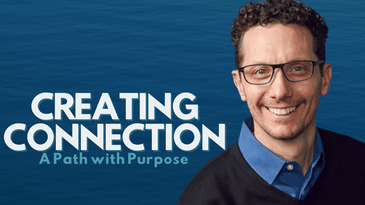
In this episode, I get to talk with Mike Geyer about creating authentic connections. Mike shares stories and approaches he uses to create authentic connections in every facet of his life. And it starts with an invitation.
Want to listen on the go? You can listen to this episode on Apple Podcasts or Spotify.
In this conversation, Mike answers the following questions:
- What is an authentic connection?
- How do I create an authentic connection?
- What are the possibilities and benefits of an authentic connection?
- How do I create an invitation for a different type of interaction?
- How to create your own coffee shop name?
Instead of a normal conversation or a simple beverage transaction, Mike offers an invitation through vulnerability, play, humor, and creativity which engages his counterpart into a more engaged interaction - or it doesn't. But when it works, great things are possible because he has created something he and the other person have co-created and can share. It's from these conditions that he’s created, and the invitation he’s put out there, that the stage is set for great things to happen.
What I loved about the episode: The mental image of Mike's daughter being embarrassed, amazed, and yet not-surprised when the barrista calls out Mike's coffee house name, and the subsequent conversation they have on the walk from the coffee shop where Mike shares his approach to getting something extra out of life and the moments of creating connections.
What I learned from the episode: Those goofy or silly moments are an invitation for a different experience, where great things can happen. I thought Mike and I were just goofballs but those humorous moments might just be a litmus test to discern who brings the creativity and openness to explore new possibilities together.
What Do You Know To Be True? is also available on the following platforms:
Apple: https://podcasts.apple.com/us/podcast/what-do-you-know-to-be-true/id1708762851
Spotify: https://open.spotify.com/show/4fJ9ME5AzOhfEZtFGCH2lA
Amazon Music: https://music.amazon.com/podcasts/97817e1d-596b-4c79-8414-1aa5945b5efd/what-do-you-know-to-be-true
What Do You Know To Be True? is hosted by Roger Kastner, is a production of Three Blue Pens, and is recorded on the ancestral lands of the Duwamish and Suquamish people. To discover the ancestral lands of the indigenous people whose land you may be on, go to: https://native-land.ca/
Transcripts - Creating Authentic Connections with Mike Geyer
Mike: I've learned in life that when I create an environment where folks are invited to care, where folks are invited to be vulnerable, where they, I'm not going to say a safe space or anything like that, but a place where it's okay to be silly, to be smart, to be curious, to be inquisitive. When folks do, when they do engage, when they accept that invitation, when they knock on the door, when they come in to this place you've created.
Roger: Welcome to the What Do You Know To Be True? podcast. I'm Roger Kastner and I'm your host through this series of conversations with seemingly ordinary people with an extraordinary talent in these conversations, we'll explore what these people know to be true about their superhero power, what inspired them and, uh, how they think and maybe even Develop that power.
Even further. The goal here is not to try to emulate or hack our way into learning their talent, but instead to understand the special, unique talent in each one of us. Today's conversation is with Mike Geyer. Mike and I've known for each other for quite a long time, and He does something that I was always really curious about.
Why are our conversations so rich, so energetic. And in today's conversation, I think we find out why. We find out how he approaches those conversations in a way that maybe you and I don't. So Mike is a global account director at Adobe. Well, Mike is working with some of their most strategic customers, and Mike has been at the intersection of technology and people for the last 25 years.
And so his superhero power of creating authentic connections is helpful. In his professional life, as you can imagine, it's also pretty helpful in his personal life. He is a husband and father of two teenagers. And in the stories he tells today, you'll hear about the connections that his grandfather created with him when he was young and how he's translated that skill into how he connects with his teenagers without any further ado.
Let's talk to Mike Geyer.
Hey, Mike. Welcome to the pod. Thank you, Roger. Good to see you. Good to see you too. I'm really excited to have this conversation as I was sharing with you earlier. I, I tend to think like our conversations are kind of like when you go to the dog park and you see, you know, like there might be 50 dogs there and most dogs are, you know, maybe, maybe interacting with a couple other dogs, but they're kind of like, you know, playing fetch with an owner or maybe like a little chase, but, you know, kind of like, just, just.
Yeah. Sniffing each other out and, and whatnot. And then there's that pack of dogs that are just tearing up the place. They are, you know, they're, they're, they're running around as fast as they can. They're rassling. They're like, they'll get involved in someone's, um, uh, game of fetch for a moment. And then they'll go sit under a tree and they're just like panting.
And then they're up and they're running around and maybe go get a drink and then go get some scratches from someone else. And And, and I think about like when you and I get together, um, especially if it's out in public, um, Were those dogs running around the dog park and everyone else is kind of like, Whoa, what's going on there.
But it's that level of excitement and that level of energy, which actually kind of leads us to why we're even talking today on, um, on the pod. And it's about really understanding, um, your superhero power in creating Authentic connections, because one of the things I know to be true about you, um, is that you do this really well, that, um, I know it in the conversations that I have with you when I talk to, you know, sometimes when I'm talking to other people, your name comes up.
Um, and you know, there's, there's this, you know, I can see the energy levels raise and other people, when they talk about you, I know, I feel it in myself when we go to talk about you and it's, um, It's really how you come into these conversations, the presence, the effect, the questions you ask, how you riff on stories that we're telling the stories you tell.
Um, so I'm really excited, uh, to be having. Any conversation with you, but this conversation, because, um, I, I want to, I want to ask you some questions and learn a little bit more about how you think about it, um, to, to understand, you know, how you go about. So, what I love about your story, um, is it reminds me so much of my grandfather and the conversations that we had and not that they were.
Um, bragging about what it look, what I did, because don't think that was part of that generation, but it was more of an invitation to hear something I experienced and here's something I'm excited about and why, um, and what I've, what I, you know, as you were describing, um, your grandfather and that invitation, I find that you do the same thing that it's very much, whether it's DNA or whether it's learned that, you know, When we're having conversations, you're inviting me in to feel, to experience that, which you've experienced and you want to share
Mike: I want to double click on that because what I agree with everything that you're saying, and when I say I want to share with you, I don't mean I have a thing and I want to break off a piece of bread and share with you. It's. I want to find a thing between us that we can share together, if that makes sense, you know, so it's not a, I'm up, you know, sharing this insight sharing.
It's like, no, no, no, I want to find a place where we can share and I love how you're using the I'm writing it down the invitation to connect. You put the invitation out there. My grandfather, now granted, I was a captive audience of a grandson and his, you know, grandfather's front seat of his Lincoln or whatever it was, but you know, in the normal world, you know, I, you provide an invitation, come on in if you'd like.
Now, that also means I have to create an environment in which you want to come interest so that, you know, there are softening things that happen. And that invitation is, you know, is an invitation to connect. But it's really an invitation to care. How can I get you to care? When I say get you to care, it feels manipulative.
It's like I'm trying to get. If I can invite you to a place where we can share something together, a meal, a story, a conversation, heartbreak, whatever it is. If I can create an environment where you care, where you're authentic, you want to be there. That's great. And it doesn't happen. You and I both know this happens, you know, if it happens five out of a hundred times, that's an amazing week or amazing day.
Um, but it is, it's that I, I really like how you said invitation.
Roger: And I know you, it's interesting. I want to go back to that word share because there is a way that we share. That is like, I'm going to tell you something about me. And then there's the share of, this is the thing we have in common. Yeah. And you're talking about the ladder.
Yeah. And that's really, I think what you do really well is invite people to discover that thing that we share. And you have, um, you have a little bit of a technique that you use, um, as part of that invitation. And you were just talking about care and I was hoping you could share a little bit about, um, that.
Technique or the reminder about finding out that, that area of where you have the thing you can share. Can you tell us a little bit about that?
Mike: There's when I'm in my office office directly above, you know, we're all on video conferences all the time nowadays, right? Um, Just above the camera is a post it note that says three words make me care.
It's it's a constant reminder. In fact, what's really funny is during the pandemic. Um, my daughter would use my office, you know, for just getting out of the house and suddenly I realized that post it note. It was not in my handwriting. It was in my daughter's handwriting. And I love that she swapped it out because it feels even more authentic and precious to me than my daughter's handwriting, right?
But the idea of how, when I'm interacting with anybody, how can I create a place where they care? And a lot of that stems from, like you said, it's me, Putting it out there. It's me being both vulnerable for mocking, vulnerable for you're stupid, vulnerable for, Hey, I need your help. You know, you have to expose that.
Uh, you know, Bernie Brown would be so proud of us having this conversation, but you know, you have to have that vulnerability, but you also have the confident confidence. I know that's the right word, but the comfort in ambiguity, comfort of, Hey, this may go nowhere. And I'm not doing this for a purpose. I'm doing this because I've learned in life that when I create an environment where folks are invited to care, where folks are invited to be vulnerable, where they, I'm not going to say a safe space or anything like that, but a place where it's okay to be silly, to be smart, to be silly.
Curious to be inquisitive when folks do when they do engage when they accept that invitation, when they knock on the door, when they come in to this place, you've created great things happen. Um, one of my favorite stories is, uh, over the summer, my family and I, we went to New York City, um, and went to a, and, uh, Early in the morning.
I'm a, you know, I'm a dad. So I wake up early and go and get some coffee. So I go to the Starbucks across from the hotel. We're in Chelsea, you know, kind of a cool hip neighborhood. And I walk in this cute little Starbucks and there's, you know, three or four other customers and, you know, two folks working behind the counter and, you know, place my order.
Same thing, double short Americano. And my Mike is a pretty common name. So I'll often say Mike G. Um, And just saying Mike G and this woman behind the counter. She's probably in her late 20s, a black woman, you know, way cooler and hipper. She lives in Manhattan. I'm a guest and I, you know, kind of look like a tourist.
She goes, Mike G, her eyebrow goes up. I'm like, yeah, I said, but, you know, the way you say it is important. You can't just say Mike G, you have to say Mike G in the house. Again, 8 a. m. on a Friday in New York City. And so she kind of her face lights up. She laughs. She goes, okay, and she writes it on the cup.
And then, you know, a couple minutes later, what do you hear Mike G in the house? And again, there's nobody there, but we all walk up and I get my coffee. It was a fun experience. Right? And so just the transaction. I just needed caffeine jet lag. But that little transaction. It was so much more than just, you know, here's four or five bucks.
Can I have a coffee please? And you know, it turned into something more in, I didn't even realize how great that experience was until the next morning when Julia, my daughter, again, 14 year old goes with me to the Starbucks and there's few things more embarrassing to a 14 year old girl than her dad in Manhattan, you know, in a cool place.
And so, uh, you know, she places her order for her drink, I placed my order and amazingly the same woman, same barista is there. She says, I don't need your name. And she writes it down. And, you know, this whole transaction is lost on my daughter, who's probably looking at her phone or looking around. So sure enough, few minutes go by and my daughter's drink comes up and mine and another Mike G in the house.
And my daughter's looking around first panic. Wait, what's happening? And then she realizes what's in. So I got to reconnect and have another experience with this barista over just coffee and I'll never ever see her again for the rest of my life. Right. But as my daughter and I are walking back to the hotel, she's like, daddy, how do you do that?
Why? You know, what's going on? I said, sweetie, I do those things 100 times a day. 100 times a day. I put out an invitation, Mike G in, you know, and then she, her eyebrow goes up. So I know I can go a little further and I'm, and I'm like in the house, you know, and I'm like, 94 times out of 100. Nothing happens.
It's just a normal transaction. It's like, okay, Mike, gee, I'll get your coffee in a second or, you know, whatever's going on. It never happens. And I don't feel bad about those moments. You know, I have no, they're just who I'm interacting with. But those six times a day, that's what is exciting. That's what makes this experience better.
And so, you know, Make me care. That woman has no reason to care about my last name. She has no reason to care about my personality. All she's there to do is to take my order and hand me a double shot of Americano with a little bit of room and everything's done. But she was in a place at that moment where she did care.
My, gee, huh? And then I'm like, oh, in the house. And then she went and confirmed that. And so what started off as a silly little nothing, But Turned into an experience on that Friday and then again on Saturday, and then I got to have a conversation with my daughter about this. I'll always look for those little opportunities and, and for me, it's, you know, put the invitation out, hoping that the other person will accept, but recognizing that they don't always want to, and it can be a little overwhelming.
Um, but I think I just love that little fun story of our, our vacations that
Roger: So much to unpack in that, because like, what would happen if it wasn't just 6 times a day? What if it was, yeah. 60 times a day, a hundred times a day. Would that be exhausting? Might be, it might, it might be a little overwhelming and it would obviously be less special.
And, and what you're doing, Oh, I would think so. I would think if everyone would be shouting Mike G in the house, wherever you go. And after a while, it'd be a little like, okay, cool. Now I got to come up with a new routine. But I, I think that that invitation with that barista who, you know, she's probably had hundreds.
Of people come through the line already at 7 a. m. in the morning. She's going to have 100 more. She's going to have to take out the trash. She's going to have to make that same drink over and over again. And, you know, New Yorkers do have a little bit of a, of a, uh, of a stereotype of, of not. Trying to, they're just trying to get through their day and when you're trying to navigate through a town of 8 million people, like just navigating from home to work, um, it's really tough.
And so, like, you, your invitation there was really an invitation to joy. And there was no, no, it was not part of the transaction. It was nothing required, but you made that day, that person today a little bit brighter when their job is supposed to be making the customer's day a little bit brighter. So you kind of flipped, you kind of, you found that place of sharing, sharing a moment of joy and it was so impactful the next day.
When you went in, you were able to share it again because it had impact, probably not in that moment, but who knows what impact that had for that person for the rest of the day. And then you had the opportunity to, um, have the conversation with your daughter, who's curious about this as well, who, you know, yeah, talk about this generational gift.
That your grandfather gave to you that you're given to your daughter and the fact that the little note above your camera is in her handwriting. And again, hopefully she's picking up. This isn't a way to manipulate right situation. It's by you spending the time curate. To cultivate that connection, um, by tapping into the thing that the other person cares about when it's reciprocated, there's magic created in that moment.
Yeah, no doubt. No doubt. And that's what makes those six moments so special. Yeah. And this is your, your superhero power.
Mike: There you go, . That's pretty cool.
Roger: When you think about what you do for your job, what you do professionally, um, tell me about how creating authentic connections helps you achieve your passion, your purpose.
Mike: When spending all, most of my career in. Technology and consulting. I'm working with people, right? And people with any number of initiatives going on and, you know, demands for their time for their attention. And, you know, it still applies to, I guess, a barista making a coffee, right? You get your job. You got to do
when I think about why we do what we do, you know, we're solving technology. We're solving business problems, but really, Technology. It's a, it comes down to who are the people we're trying to impact. I'll tell you, you know, a lot of my job is in sales. And so, uh, there's a, I almost want a tattoo to my arm whenever I'm in a conversation with a customer or a client who, and I don't know what to say.
My fallback is, you know what, help me understand who's your customer. Paint a picture of your customer for me. Tell me, understand what they're trying to accomplish. And sometimes their customers, of course, the person who drops their credit card to buy the thing, the service they're doing, but often just as often their internal customers.
Well, I actually work for the CFO and you know, she needs this for me, or I, you know, work, I support the marketing team, I support this team and I'll ask the people I'm talking to. Help me understand who is it? Who's going to be benefited from this? I know you're going to be benefit from it because we're building this thing.
And it's part of your job, of course, or we're doing this thing together. Get it out, get out of your head into the head of the ultimate person. And that takes a level of empathy. It takes a level of curiosity that shifts the conversation away from whatever I'm selling. If it's a, uh, you know, a bunch of consultants, if it's some technology and shifts it to how do we solve their problem?
And now I'm starting to think more about who that person is and a lot less about myself. And if you're my customer, you're my client, you're somebody who I'm hoping will hire me, my company, whatever it is, I'm getting you to think about that person as well. Now you probably already are together. Now, suddenly I've invited you into a new place.
It's not a place where I'm selling to Roger. I'm trying to, you know, win you over or woo you. Instead. You and I are now locked arms a little looking at that customer, looking at that, the person, that solution we're trying to do, and we're trying to solve for them. And so I'll put those, I guess I didn't realize this, but I'm putting that feeler out there.
I'm putting that invitation to tell me about your customer, you know, what service or what are you trying to provide for them? How will you know that you've done your job? How will they know that you've done your job and just start thinking about that. And suddenly now, not only am I inviting this person I'm working with.
To care, not about me, I mean, sure, care about me, but care about them care about what theirs I'm making them care about something bigger than just what they're talking about. And what that does is it opens up their mind. I believe it opens up their mind to start thinking of new and novel ideas. They'll also in these conversations start to feel.
safer about bad ideas. So now let's pivot to when I work with my team. I'm usually in a leadership role where I now I've, I've convinced Roger that yes, my widget is the right solution to help him solve his customer's problem. Now you have to pivot back to the team at headquarters and say, okay, guys, let me tell you about Roger.
Roger is a bloody blah as such and such company. And he's got this problem. He needs to solve for Laura, his customer and whatever she's looking for you, right? And now I'm making and I'm trying to get my team to care. And so I'll invite them into not the how do we sell this widget to Roger? How do we deliver this widget to Roger?
But more of. How do we solve Rogers customers problem? How do we help Laura be what she needs to be by selling software services? Wherever it is to Roger and it invites my team to care a little more invites them to think around because They're not just checking off the box must do this this this it's the you know Years ago, uh, I was doing work with a, uh, a major bank who was having all sorts of problems with mortgage mortgage rate with mortgage signups, people just weren't signing up for mortgages on their website.
And, you know, we had to finally tell them, Hey, I just want to make, let you know, nobody ever wants a mortgage. The idea of paying you three times what the value of the house is over 30 years as thing, nobody, nobody, nobody wants a mortgage, but you know what people want is they want a home. And so when you think about.
The end customer, the end person in a way that they just want a home. The mortgage is how they're going to get to that home. It shifts your thinking. It shifts, you know, beyond just the immediacy of it. And so, um, if I can get you to care, I believe. That you, as my customer, my team on the delivery, a better solution, a better outcome will be there because people care.
They want, they need to come through for the Lars. They need to come through for that family's trying to build, start a family and have a home by getting a mortgage and all these other activities. It lifts us above the T the day to day of what we're doing. And so maybe I gave that, you know, nice barista, a tiniest tip.
I mean, I gave her a tip, of course cash, but I gave her another tip. I gave her a tip of that was a little better. That was a little nicer experience and everyone benefits.
Roger: Well, and I, I'm, I'm going back to the, um, the story you told about your grandfather, your grandfather created an authentic connection with you by getting you to care about that bridge.
Yeah. The connection you made with the barista was not about the transaction of, of, of your coffee drink, but instead that moment of joy. And then in doing so, then you and your daughter deepen connection because you were able to explain why you do what you do. Yeah. And, and. The, the amount of joy, the how, how life is better in those six moments a day makes life worth, you know, uh, so much more enjoyable.
And yes, we're talking about this in the professional area. Yes. We're talking about this in, um, the attempt to, yeah, sell more products, sell more widgets, but you're not talking about the widgets. Right. In talking to your customer about their customer, you're creating a shared, um, Shared area of, uh, of, you know, something in common that you both want to, um, you know, achieve or produce something better for that person in the middle.
What's interesting about asking your customer about their customer. You know, what do you know about your customer? You're actually, you know, you are learning about your customer and how they think about their customer. So absolutely. Yeah, there's, there's, there's through lines. There's a little bit of the nesting doll sort of, uh, uh, aspect to this.
Um, I, I do feel like you're, you're dropping some, some, uh, nuggets of wisdom here on us, uh, when it comes to understanding how to create authentic. authentic. Connections. That's really lovely. What do you know to be true about creating authentic connections?
Mike: What do I know? I know, and I'll keep it in the professional world, better results.
And I don't have KPIs, key performance indicators. I don't measure this, but what let's use a project manager, someone who I'd work with on a daily basis, most often, you know, they don't work for me. They have another boss. They have somebody else who's measuring their performance overall and their raises and compensation, all that stuff.
But what I would ask them is I would take on my, the responsibility in my own head of like, well, while you're on. My team on this engagement here, how can I help you succeed? What are you Roger looking to do in your career that I can further, you know, obviously in this engagement, we're going to be doing, you know, five months together, we have to on time on budget, you know, scope and communications, all that blocking and tackling, but what else do you want to learn?
Are you interested in sales? Are you interested in marketing? You're interested in technology because. Over the course of the next 3 months, Roger, we're going to get to know each other really, really well. And I'd like to find opportunities while you're working with me on this project, you know, I'd like to find opportunities that grow your skills if you're interested, you know, maybe you're getting an MBA after hours.
And the last thing you need is more homework. So we'll take that off. But what I'm doing there is I'm inviting you as my project manager to think beyond just your engagement. I'm thinking beyond just the work you're doing. And I'm saying, if there's something that we can do together that furthers your career.
I just want to let you know, I'm going to learn along the way too. So this isn't just me being selfless. I'm going to benefit in working with you. Um, good things will happen. So by me letting you know that I care, that I care about you, that I care about your career, that I care about your success. And I care about where you're, what you're trying to accomplish.
I believe I'm lowering shields or barriers that you might put up on intentionally or unintentionally. I'm creating again, a safer space for you to be vulnerable for you to say, you know what, Mike, I do want to learn more about sales because you know, I feel like that would really benefit my career. I don't want to be a salesperson, but I want to learn, you know, I've seen how you do this or I've seen how somebody else does that.
And so you'll, you'll be a little bit more vulnerable. You'll give a little more. Um, when I talk to you about the project and I describe who our customer is, our client, and I talk about, you know, where they are in their career, what they're trying to accomplish along the way. I'm signaling to you to look beyond just the statement of work that we're trying to execute.
I'm, I'm signaling to you. It's important not just to care about your team who you're responsible for, but I need you to look out at your project sponsor and who's on their team. Who's going to be your BFF best friend forever during this engagement? You know, who are you going to be thinking about?
Because The one thing I know is these activities lead to better results. It's scarier. It's tougher. When I have conversations like this during a sales cycle, generally speaking, my team around me gets a little uncomfortable. They want to know the blocking and tackling. They want to know the specific things that Roger needs to accomplish on behalf of Laura, his, you know, sponsor, his CEO, or wherever she is.
And so, you know, I need to back up a little and have a little more room for a conversation about what's going on in the totality. It is a little uncomfortable. And so I know I have to send signals to my team of guys. It's okay. We're going to be uncomfortable. We're going to be fine. This ambiguity, it's okay, because it will produce better results.
And so I know I've answered your, you know, what's the one thing, you know, And I'm going to say it again. I believe better results come out. I believe my coffee tasted better in New York city because of that experience. I know my trip was better because of that experience. I know that my projects are more often on time on budget and, you know, overwhelmingly successful to their customers because.
People they're thinking about your work. They're thinking about what's going on when they're in the shower later today. You know, I'm getting an unfair advantage because. You care about me. You care about the project. You care about the customer. You care about more than just, I'm here to dig a ditch. I'm here to pour a cup of coffee.
I'm here to write some code. I'm here to design an experience. Are you more interested
Roger: in better results or better experience?
Mike: When I focus exclusively or even primarily on the results, It's usually at the detriment of the experience. And I'd love to show you the spreadsheets and the numbers that validate what I'm about to say, but I can't, so I'm not gonna. When I focus on the experience, The results more often than not are as good or better than expected and anticipated.
Roger: I, I think there's, there's actually a lot of quantitative and qualitative, um, data throughout the ages that will show it's not all that I got a book or 2 over my shoulder. Tell me what it's, you know, I mean, the, the Kierkegaard, it's not the destination. It's the journey.
Mike: Right.
Roger: Um, all the way up to, you know, we, um, we can see the, how we make up our teams at work.
Um, the, the, the process upon which we create team agreements, who we invite into the team, how inclusive we are, we do those things. Right. The data shows we actually produce better results.
Mike: That idea of we're going to figure this out together only works when you and I are engaging together. When I have, when you and I care about what we're doing.
Um, and I think that's, you know, a critical part of the success that comes from this.
Roger: And I'm, I'm connecting that dot back to the Maya Angelou quote. Again, no one, no one will remember what you said, but people will remember how you made them feel. Yeah. The same thing when you're, when you go on that journey.
Like when you work on a project, when you go on a vacation, no one, no one remembers. Um, yeah, what was said at the very beginning or all the steps you took and whatnot, they just remember sort of this, this sort of doughy feeling. Yes. Cloud or this, you know, rays of light about the experience. Um, yeah. And, and I think, you know, what I'm pulling from the conversation is how you approach authentic connections is that you're creating those brave spaces for, um, by being vulnerable, by trying to understand, um, what they care about by creating areas where you both care about.
And inviting them, uh, in, into conversations about that and then doing so in a way that allows for vulnerability. And let's bring Brené Brown back in here. We might have to pay her royalties, but she'll talk about, you know, you do not get creativity, innovation, or change without. Vulnerability, so you're using vulnerability to create experience experiences to allow people to participate in something you both jointly care about to create better.
Results
Mike: and I wonder if we're tapping into some, like, our lizard brain, or, you know, some fundamental part of humans where we need and crave connections where, you know, evolution is trained us to become a group of people society. And, you know, when. Versus a, a wall between us build this technology for me, make this coffee for me.
No, no, no. Take that wall down and invite and say, Hey, let's share an experience where coffee comes out at the end and money goes in, you know, that's fine. But we're creating experience where the coffee and the money are the just happenstance. It's the mortgage to the home. It's the whatever it is. And so that is something different that I mean, now you sound like Howard Schultz.
Roger: Cause he talks about the experience more than, it's not the cup of coffee. It's the experience that people have. Um, what, because you've been doing this all your life, um, what did you used to believe was true about creating connections that you found out to not be true?
Mike: What used to be true? I think whether intentionally or not.
I hope unintentionally because it's not gonna be very flattering for myself. I think I started this with a selfish perspective. It was in a, how do I get you to care about me in my problems? I have a customer named Roger who's trying to solve a problem for Lara. I need this. I come to me and it was a taking experience.
Don't make it about me. No one, it's both the most freeing and terrifying part of the human existence, which is the universe is indifferent to you. And so don't, when you make it about something else bigger than you, that's where the magic happens. And so it's easy to say, how do I get you to care about me, me, me?
Because I have this problem I need to solve. Instead, if I shift it to a we, we, we, that's where the good things happen. That sounds so cliche for me to we, but,
Roger: but there's something about cliches that there's the reason why they're cliches, right? There's truths. In them, a colleague of mine who I'm going to have on the show, he doesn't know it yet, but I'm going to have him on the show was was sharing with me this idea about the evolutionary advantage of joy, and I don't think he came up with it.
He learned about it someplace else, but there's obviously a evolutionary advantage to fear.
Mike: Right.
Roger: When something moves in the bush, it's time to run. Right. But he was talking with me about this idea of the evolutionary advantage to joy. And it's when you're not in a fear state, but if you and I are able to experience joy.
We are more likely to want to spend time together. We are more likely to be able to free our minds to think about creative solutions to novel problems. We're able to, um, you know, create, you know, real bonds about, um, about being together. And so, yeah, there's the idea that, you know, you don't want to be that gazelle.
That's outside of the herd, because that's a scary place to be. That's a, you know, there's, there's a threat to being there, but it's when, you know, there's no lions on the, on the, uh, the Serengeti and you're just. Hanging out with the other gazelles. There's time for play and there's evolutionary advantage of play, not only of bonding, but then also being able to come up with, um, with innovative and creative solutions that.
Or just experiences that make, make life better. So, um, are you, I know we're almost out of time. Are you ready for the lightning round? I'm ready for the lightning round. Um, so which would you prefer a strenuous yoga session or a deep meditation? Deep meditation. What's your go to pizza or tacos?
Vanilla ice cream. Um, yeah, points off for, for going off the menu. Uh, when, when you're going on a retreat, do you head for the water? Do you head for the mountains? Ooh, water, water, water.
Mike: Yeah.
Roger: When you're learning something new, do you prefer to listen, read, or watch? Uh, watch. A favorite book or movie you recently watched and would recommend?
Mike: I am three quarters through my fifth reading of Zen and the Art of Motorcycle Maintenance.
Roger: Love that. Mike, thank you so much for your time, for your insights, for your vulnerability, for, um, coming in and creating a space that we both care about.
And experiencing that, being able to experience the joy, sharing the stories of, you know, the moments with your grandfather that brought a lot of emotion for me and my grandfather. Um, the story of, you know, Mike G in the house and the impact it had on Julia and that connection. Um, you, you have a way of telling stories where I feel like I'm walking and I'm able to experience joy with you.
When I'm, you know, 3000 miles or 30 years apart. So thank you for doing that. Roger. Thank you. This has been great. I really, really enjoyed the conversation. Me too.
Thank you again, Mike, for sharing what you know to be true about creating authentic connections, whether it's at home or in a coffee shop in New York city, what Mike G in the house. Knows to be true about authentic connections is that they create better outcomes because of an invitation for a different experience.
Instead of a normal conversation or a simple beverage transaction, Mike leverages vulnerability, play, humor, and creativity to invite his counterpart into a more engaged interaction. One that is based on a shared experience and a shared set of feelings, and from the conditions he's created and the invitation he's put out there, then the stage is set for great things to happen, which leads us to consider what are the conditions that allow our superhero powers to thrive?
How can we create the right environment for our star to shine and for the stars of others to shine even brighter? Thank you again, Mike, for the conversation. And for sharing your superhero power, and thank you all for listening in if you like this pod, please do us a favor and give us a review or click that light button, whichever platform you're on.
And thank you for doing that. It's a great way to help others discover this podcast. What do you know to be true is a three blue pens production. I'm your host, Roger Kastner, and we are recording on the ancestral lands of the Duwamish and Suquamish people to discover the ancestral lands of the indigenous people.
Whose land you may be on, please go to https://native-lands.ca.
Okay. Be well, my friends.