
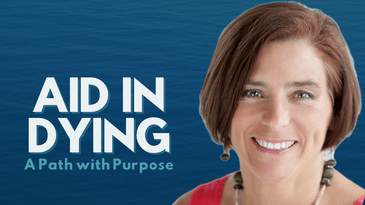
Reducing suffering is a deep, innermost urge as a human. To be able to end needless suffering, that is a gift, one we’d want for our loved ones, and one our loved ones would want for us.
Today’s guest, Stephanie Murray, is a Volunteer Client Adviser with End of Life Washington, and she provides that gift for the terminally ill and their loved ones.
When it comes to planning, it makes sense to work with someone who has both the knowledge to build a plan, and the experience to know how to address when the plan goes sideways. A combination of expertise and improv. Those two things are what Stephanie draws upon. And for her clients, it’s the last plan that they will make.
It’s one that gives them one last bit of control when they are losing all remnants of control.
In this episode, Stephanie answers the following questions:
- What is medical aid in dying?
- What is the medical aid in dying process and legal requirements?
- What does it take to perform medical aid in dying services?
- Is it possible to end suffering?
We don’t talk enough in the West about death, which is odd considering it’s what’s ahead for all of us. The one thing we all have in common, the great uniter, and yet, we remain silent.
This is why I think it’s amazing that there are people like Stephanie who are there to help us through something we have little experience in, don’t want to talk about, and have very little control over when seemingly everyone around us has a strong opinion about it…even if we don’t talk about it.
Can you think of a greater gift in life than giving someone who is losing control, the last experience of control they may have? Especially, when it is to alleviate suffering?
My favorite quote from the episode: “People say there are two certainties in life: death and taxes. You can avoid taxes.”
What I know to be true about the episode: The ability to hold space for ending suffering is a tremendous gift. And Stephanie’s ability to hold that space for both her clients and their loved ones is truly inspiration.
What I learned from the episode: Only 11 states in the U.S. allow medical aid in dying. According to American Clinicians Academy on Medical Aid in Dying, only 22% of Americans have access to medical aid in dying services.
As of December 2023, medical aid in dying is legal in eleven jurisdictions: California, Colorado, District of Columbia, Hawaii, Montana, Maine, New Jersey, New Mexico, Oregon, Vermont, and Washington.
Resources mentioned in this episode:
- End of Life Washington: https://endoflifewa.org/
- American Clinicians Academy on Medical Aid in Dying: https://www.acamaid.org/
- Documentary: Bob’s Choice: Why a Seattle man chose death with dignity: https://www.youtube.com/watch?v=aOG6i2Mfu7E
If you enjoyed this episode, please share this episode with one other person. Thank you!
Music in this episode created by Ian Kastner.
"What Do You Know To Be True?" is a series of conversations where I speak with interesting people about their special talent or superhero power and the meaningful impact it has on others. The intention is to learn more about their experience with their superhero power, so that we can learn something about the special talent in each of us which allows us to connect more deeply with our purpose.
"What Do You Know To Be True?" is hosted by Roger Kastner, is a production of Three Blue Pens, and is recorded on the ancestral lands of the Duwamish and Suquamish people. To discover the ancestral lands of the indigenous people whose land you may be on, go to: https://native-land.ca/
ABOUT THE PODCAST
Charting a path to purpose starts with a deeper understanding of one’s superhero power and how to make a meaningful impact in service of others.
This podcast is for anyone who helps other people unlock their challenges and achieve their potential. Our audience wants to think deeply about their work and how to increase the positive impact it has in service of others.
The goal of these conversations is not to try to emulate it or “hack” our way to a new talent. Instead, the intention is to learn more about their experiences with their superhero power, and in doing so maybe learn something about the special talent in each of us that makes us unique.
Our guests bring humility, insights, gratitude, and humor as they delve deep into their experiences, learnings, and impact their "superhero power" has had when used successfully.
The path to purpose: Ordinary people, extraordinary talent, meaningful impact in the service of others.
Episode Transcript
Stephanie: A lot of times they'll ask me, well, how will I know when it's time? There's no hard and fast rule. And what I've seen is people know most of these folks are on hospice and hospice does a really good job of managing the pain. It comes down to a quality of life. And when they feel like they've just lost the quality of life, that's when they say I'm done and they are So, focused and you know, I had a woman a few days ago who was concerned because she had a, uh, a gag reflex and she's really worried about that.
She took those masks. She sucked them down like that. No problem. I mean, it's, they're very, very focused there. This is their choice, their option. it's an amazing place to be with these folks, and just, you know. Able to fulfill that wish they have.
Roger: Hi, I'm Roger Kastner and welcome to the “What Do You Know To Be True?” Podcast. In these conversations, I talk with ordinary people about their extraordinary skill, their superhero power, and the meaningful impact it has on others. The goal is not to try to emulate our hack our way to a new talent. Instead, the intention is to learn something more about their experience with their superhero power, So, that maybe we can learn something more about the special talent in each of us.
When it comes to planning, it makes sense to work with someone who has both the knowledge to build a plan and the experience to know how to address when the plan goes sideways. A combination of expertise and improv, and those two things are what today's guest draws upon. And for her clients, it's building a plan that will be the last plan that they make.
It's one that gives them the last bit of control when they're losing all remnants of control. Our guest today is Stephanie Murray, and her superhero power is holding space for death. If you're ready. Let's dive in.
Good morning, Stephanie. Thank you for joining me on the podcast this morning.
Stephanie: Hey, Roger. Good to see you
Roger: So, we originally met on the pickleball court about a year ago where you are Known as a community builder. You're organizing games. You're running Reserving courts, you're bringing people out to play.
You even bring the muffins, which is such a wonderful thing to do on the court. You've got fast hands. You've got great dinking skills I think you got a really good lob and you have a creative way with the swear words, which I really appreciate and admire. I also, know you're a big traveler and you've helped me in planning trips to Ireland and Iceland.
And someday I'm sure I'll seek your guidance on countries that start with a letter other than I, and you also, when you travel, you're a big blogger. You show photographs of where you've been and write a lot of detail about where you go. And it's just lovely to be able to sort of travel with you vicariously through that blog.
And I really appreciate that. But why we're here today is something is something different. You're a volunteer client advisor with end of life, Washington, and your superhero power is Holding space for death. Can you tell us about the work you do with end of life, Washington as a volunteer client advisor?
Stephanie: You bet. So, I probably should start with a little bit of information about end of life, Washington. We're a nonprofit spin around. 20 years, give or take in one form or another. And we do policy advocacy, general education around end of life options, and primarily around helping people, with aid in dying preparation.
We're a hundred percent donation funded with many, many volunteers and a very small professional staff. And I help folks, navigate the process of the law. and get rid of any roadblocks to getting their wishes fulfilled. And I came to this work, I was a volunteer with hospice, and as strange as it sounds, I didn't get close enough to death.
I was very helpful, it was very rewarding, I was kind of respite care for families, and I wanted to be there when they died. I had always thought that to do that, I had to be a hospice nurse. For I wasn't interested in changing careers and becoming a nurse. And then I fell into this, uh, opportunity of being a volunteer with End of Life Washington.
And it's So, rewarding.
Roger: So, you just said that you wanted to get closer to death, and, and to be a part of that experience. Could you, could you say a little bit more about that, as well as, like, what or who inspired you to, to become a volunteer in this space?
Stephanie: Well, I mean, it's interesting, and, and as I get older, and I kind of learn more about myself, I have realized that I believe in reincarnation.
And that this isn't our only go at this. I'm very comfortable with older people, with people dying. And I went to a continuing ed seminar that was put on by End of Life Washington. And it kind of opened a door that, hey, you could help this.
So, I raised my hand, I went through training, and I'm very suited to the work for a number of reasons. One is I'm equally left brained and right brained. So, I've done tests and that's what they've told me. and So, I'm really good with the paperwork and all the steps, cause there's a formal process that people go through to be eligible, but then you have to be a people person.
You [00:06:00] have to be in a space with these people in the most appropriate way possible. They're just amazing time in their soon ending lives and be compassionate and be understanding and just be with whatever is there. And So, it's just, I'm drawn to the work and it's just, and you know, yes, maybe it's my superpower, but I feel like everyone who volunteers like I do has this same superpower.
Because that's why they do this work and that's why they're good at this work.
Roger: Yeah, I think we've all heard the horror stories about the amount of needless suffering that people go through at the end of, of life before they die. And I think we, you know, we all have different, you know, beliefs or maybe perspectives, but I'm sure that's something until we've experienced it.
We don't know what it’s like. We have stories in our heads, probably from movies or from things we've read in books, but until we're in the room, I'm sure it's a much different experience.
Stephanie: And a number of my peers have experienced bad deaths with their family members or friends. I'm not one of those.
I've not experienced it and I know the importance of being able to have the control. In your own, you know, of your own life and your own death and to choose when it's going to happen. I mean, there's, it's not just anybody and their brother can do it. There are qualifications. You have to be a Washington state resident, an adult of sound mind.
You have to have a terminal diagnosis with less than six months to live, and you have to be able to self ingest the aid in dying meds. So, it's a very formal process. If you will, two doctors are involved, there's oral requests. So, that's that part of my brain that's really organized and can help them through that process.
And then, you know, once that's done, the prescription sits at the pharmacy. And they can fill it if and when they want to, and then they would call me and I would [00:08:00] come to them the day of their choosing and, make some ends and give them to them and be with them and their family and, and help them pass.
Roger: And I really appreciate what you said earlier about being equally left brain and right brain and being able to handle the process and the planning and then the emotional side, the, the, you know, what, what happens in the room, the family, the, the, the client there. Their partner and So, would love to go deeper into all of that Um would like to first ask about that process and You know, I mean as you and I are both big planners and we also, know that When we're whether it's planning trips or even just a pickleball on Saturday outing we know that all that planning has value, but we also, know in the moment Things might go a little, little, uh, sideways on us and I, you know.
If I can tell you a story from when my wife was pregnant with our oldest and she’s in labor, and the nurse came up and said, “Hey, you know, things are moving fast. If you're going to want an epidural, now's the time.”
A few months earlier, my wife and I had written up the birthing plan, and the birthing plan said no Epidural.
So, when the nurse came forward and said, “Hey, you're running out of time. If you're going to do it now's the time.”
And of course I'm trying to be respectful husband and I say, “Actually my wife doesn't want to use the epidural,” and a hand reaches up and my wife says, “YES I DO!”
30 seconds later, the anesthesiologist burst into the room and we'll never forget this line: “Here comes the sugar!”
But it was just a great little example of we can have plans, but then, you know, things will change.
You know from from Dwight Eisenhower to Colin Powell to Mike Tyson They've all been quoted really talking about this idea of values of plans But those plans kind of go out the window once you're in the arena.
Yeah so, how do you deal with that? Because I know you do a lot of work with your clients about creating those plans, working with the family, getting people ready, for the day. But then when the day happens, things probably go sideways. How do you work with that?
Stephanie: Well, I mean, it's, it's funny, the tagline on my email says over prepare and then go with the flow.
And I am a planner and I also, know that. Best laid plans. I've taken some improv classes in my day, and I feel like that's a really good skill for this. Well, for life in general, but you know, so, I, I try to educate and inform and help them as much as I can. Here's what to expect. And then when I show up, it's a weird space in a way people don't know how they're going to react.
And so, I just am in the moment and I, I feel good about the fact that I can just, you know, Let it be what it's going to be and then I have the compassion to, you know, uh, provide solace to someone who isn't bursting out in tears or, you know, if the husband says, “no, no, I want to mix the meds, I'm a doctor.” And I say, “okay, well yes, you can do that if you want. If you wanna be her husband right now, instead of the professional role…” you know? So, just in the moment say, here are your options, and it's your guys' show. You do what you do, what you wanna do.
There's very little that they can't do in the moment, one of which is they have to self ingest So, someone can't pour the liquid down their throat.
But other than that. Whatever they need to do, it's their, it's their deal. And So, I'm, I'm very comfortable letting them be.
Roger: And I imagine there's also, times when you, you, you use those improv skills, the yes, and you give options, but there's probably times where, and I think you gave me a story before about where you gave.
You give choices, but then a little bit of a recommendation in that, and even the example you just gave of, okay, do you, do you want to be, do you want to be a husband in this moment, or do you want to be a medical professional? Because we've got, we've got medical professionals here. You're the only husband.
I'm sure you wouldn't say it like that, but I'm sure you, you, you lead them to, because you've, you've done this before. You probably know what's where, you know, where they need to attend to in that room.
Stephanie: And they, they see me as the expert. And while I don't have any medical training in this arena, I've done this a lot of times.
You might've been thinking about a time I shared there was someone who the woman wanted to take her meds in bed. And the husband had come to me and said, I'd really rather she not do that in bed because I have to sleep in there, you know, and I told people, you can take it wherever you want. And I, and the bed was upstairs and there were some winding stairs up to the bedroom.
And I said, you know, it might be better if you took your meds downstairs. because then when the, the folks come, the funeral home comes, they don't have to navigate those stairs up to the bedroom. “Oh, you know, that's probably a good idea.” And to some extent it was a little bit of a malarkey because I tell people, you can take your meds anywhere you want because people die everywhere.
And the funeral home fingers it out. But in this case, the husband really didn't want her to do that. And So, I. I don't do it very often, but I kind of pushed his agenda and made it, and changed her plan a little bit.
Roger: I was listening to a podcast in preparation for this, uh, where someone was talking about little things they do, when they're working with the family, uh, when they're working with the patients, little things they do to try to help the emotional side of the family be prepared and, and even, even after the patient has, has passed things that they do to, you know, either not only the, the, the tidying of the bed, but also, maybe put, put a photograph or put a memento on the pillow and turn down the lights a little bit, or before, yeah, while the person is dying and getting very close to taking their last breath.
They'll, they'll ask the family members to come in one by one to say something to, uh, the patient. Any, any little thing like that? Not little thing. It's a huge thing. But do you, do you have anything that you do, that really helps with the emotional state of the family in this process?
Stephanie: Well, I mean, and some folks will hire a death doula.
So, I was with someone a couple days ago, and so, that person is, that is really their role in, you know, maybe a ceremony before, maybe a ceremony after. I talk to the family because after the person's taken their meds, they're asleep in like five minutes. And so, at that point, the focus kind of shifts to the family, and I just want to make sure that they, they know what to expect.
The death can take 10 minutes, it can take 32 hours, that's the longest we've had. And average is two hours. But I kind of, I want them to think about, and we do talk about this ahead of time, think about what would it be like if she died really fast? And [00:16:00] some, cause some people are like, she died too fast.
I'm like, well, that's what she wants, you know, but think about what's it going to be like if it does take. And she's out of pain, but So, it's kind of setting there. Expectations in a way,
Roger: So, I know you work with each client for some time before, before their, their day of dying. Could you tell us a little bit about that process?
I know you talked about a little bit in the intro, but I know it's very planful and it's very thoughtful and you develop really strong relationships with your clients. And I was really impressed when you were telling me about some of the conversations you've had. So, I'm curious as to that, that, that framework or process you follow.
Stephanie: Yeah, you know, it's interesting because I think it's because of what we're dealing with that the relationships get strong fast because there's not, a lot of times there's not a lot of interaction or necessarily time spent with them. you know, I start off with a phone call introducing myself and setting up a face to face.
And then I go see them and talk through the whole process and, you know, typically there are steps that need to take place to get to the point where they have their meds. And So, I'm calling or I'm emailing or texting and just, okay, here's what the next step is because there's, I don't want them to have to worry about the process as I tell them, I'm your brain, I'll, I'll keep you moving So, that we get.
Get what you want. And then a lot of times the prescription is written. It sits at a pharmacy until they're ready to take it. And then, you know, I, I just see how often do you want me to check in with you? You know, maybe it's don't call us. We'll call you. I've had people who've been in this situation and staying healthy enough for a couple, three years.
And So, I call them every month. That's what we agreed upon. I call them [00:18:00] and my husband is like, Hey, What are you, the Grim Reaper? I'm like, no, no, they want me to check in with them. And they really appreciate me checking in with them. You know, once a month, how are you doing? Well, not ready yet. Like, okay, and then at some point, and that's what they a lot of times will ask me, well, how will I know when it's time?
There's no hard and fast rule. And what I've seen is people know. Most of these folks are on hospice, and hospice does a really good job of managing the pain. It comes down to a quality of life. And when they feel like they've just lost the quality of life, that's when they say I'm done and they are So, focused.
And, you know, I had a woman a few days ago who was concerned because she had a, uh, a gag reflex and she's really worried about that. She took those meds, she sucked them down like that. No problem. I mean, it's, they're very, very focused there. This is their choice, their option. And, it's an [00:19:00] amazing place to be.
With these folks and just able to fulfill that wish they have.
Roger: Let's lean into that a little bit. What's the impact of holding space for death on others, both your clients and the family. It's, it's giving them
Stephanie: the power. And it's interesting because So, many people will say, well, gosh, we're kind of to our pets and we are to people.
And there's some truth there because not everybody can do this if they want. And it just, it allows them to have. Whether they take the meds or not, if they're at the pharmacy in some that safety net that if I want to, I can do this. It's not out of my hands and it's, it's really, I'm proud to live in a state that has this as a law.
Roger: Yeah, I, as, as someone with, I think I'm human, I have control issues. and when, at that point, [00:20:00] when you're terminal, when you have, You know, the limited time and you're losing control and losing the battle, being able to have that last bit of control of being able to say, yes, I'm ready. It's time. uh, must, must be very, empowering, uplifting.
Stephanie: Yeah. Yeah. It is. It's, it's good for their mental health. And it's interesting because some people are like, I don't know if and when I'm going to do this. And I always tell them that you're in charge of this process the whole way. Even if I'm standing here, handing you the mints to drink, and you say, I don't want to do this now.
It's it's your show. Or I have people who like, okay, I meet him in February. They say May 10th is my date. I'm going to have a big party. I'm going to have the catering spirit out. And So, it's all over the map. The planning that the client does, as far as am I just going to wait and see [00:21:00] how I feel? Or I like going to set a date and this is when.
Roger: So, how does it feel when you've actually, you know, used your superhero power of holding space for death? And it has had that positive impact on others. How does it feel for you?
Stephanie: I mean, I tell people it's an honor to help them with this. And when I leave a death, it's, I say, it's an emotional hangover. I'm, I'm usually not super sad or crying.
I'm not attached to these people in that way. And it does, it is I think just deep down it's, I've, I've, it's a spiritual thing, I guess, and I, I have a kind of a lower key day that day in honor of them. it used to be that folks would take their meds with alcohol. We thought that sped up the process. [00:22:00] and So, what I would do that night is whatever alcohol they had.
I had a woman who used cherry, cherry liqueur, she called it cherry herring. I had a shot of cherry herring that night in honor of her. It's So, fulfilling, rewarding. And I frequently get no notices from, uh, their family, thanking me for my compassion and my competence. And it makes me feel really, really good.
And then I make a difference.
Roger: Yeah. I mean, it's, as you said, they, they're always in control. but you are, you were helping them through the process and really ending suffering and giving them control in the last minute where they Probably don't feel like they have a lot of control that I can see how that probably feels really, really wonderful.
And really, I want to say life affirming. Yeah, I kind of really like that and I kind of really don't. But
Stephanie: for [00:23:00] me, it puts it for my life. It puts things into perspective. Cause, you know, I help people who are anywhere from in their 20s to 98, I think was the oldest person I helped. And it just, life can be short and take advantage of life when you can, cause it could change quickly.
Speaker 3: So, what do you know to be true about holding space for death?
Stephanie: Something that I'm drawn to, and I, I'm proud that there are people like me. I am proud of myself that it's easy for me to do and it means So, much to So, these people that I can ease their suffering. And they're a wish.
Roger: It's a lovely gift, that, you know, what you're able to give people by bringing both that left side, left side of the brain and right side of the brain to the [00:24:00] moment to help them because, you know, in, in, in Western culture, we don't, we don't talk about death.
We don't, there doesn't seem to be a handbook. And yet there's plenty of handbooks out there. there, there doesn't seem to be a guide to help us yet. There's plenty of guides to help us through this, but we just, we don't talk about this enough and, and yet it's coming for everyone. Right. It's one of the people
Stephanie: say the only thing you can count on is a death and taxes.
I said, You can avoid taxes. The only thing you can't avoid is death.
Roger: So, what, what did you believe early on about holding space for death that you've come to learn is not true.
Stephanie: I never envisioned that I could be in a role like this. I thought that I had to have professional training and. It's interesting how my peers, they come from all walks of life, and some do have professional training, medical or whatnot, priests or whatever, and some don't, and [00:25:00] it's, it's, it's something inside, not necessarily skills that you've attained along the way, that allows us to do this work.
Roger: Yeah, and imagine, again, it's that you have to have that balance. of being able to, you know, have, have the logistics down, but then also, be able to attend to the emotional side of it. Not only the emotional side of the client, of the family, but also, your, your own.
Stephanie: I mean, it's interesting because I've let it be okay that when I leave, I'm not an emotional wreck or depressed or sad.
Like what am I? Some of the hard, you know, heartless. No, it's just, it's part of life. And I mean, granted, if it were my sister I was helping take the meds, I would probably not be the VCA in that situation, and it wouldn't be a very hard situation. I don't know these [00:26:00] people very well, and I'm serving them in a role that I'm proud to do.
Roger: And by helping them take control, you are, you are preventing needless suffering, which is something that everyone would want, So, that's the logic side and there's the emotional side. And some of us might not be prepared at the moment to be able to do what you do. So, I'm sure, I'm sure there's a lot of gratitude and, and, uh, appreciation.
Uh, from the families, from the clients. So,
Stephanie: many of my friends will, you know, they, they know what I do and they support what I do. They, maybe they voted to do the law and 95 percent of them say, I could never do that. I just, yeah, it's just, that's just not anything they could ever conceive of doing. And, and my husband is like, he totally supports it, but he's like, it's just, I can't get my brain around the [00:27:00] fact that I'm here today, putting himself in the shoes of someone who might be taking the risk.
I'm here today. And I know that on Tuesday, I won't be here. Just knowing the time of your death is just, It can be
Roger: mind
Stephanie: blowing.
Roger: Yeah. So, when you're talking to some of your clients who set a date, what's that experience like you say it's, it's, it can be mind blowing. I imagine it could also, run the whole gamut of feelings that some of them are, you know, relieves.
Some of them, you know, especially if they're putting together a farewell, it, you know, maybe looking, even looking forward to it. Is that, is that a, well, yeah,
Stephanie: I mean, So, the one guy I helped and there was a documentary that was done on him, his name was Bob and, and, and the documentary actually won an Edward R.
Murrow award, not reward, both, I guess. and that's the guy I met him in February and you know, like soon thereafter, he said, [00:28:00] May 10th is my date. And he explained that there was a, there was all kinds of party, a party plan and all kinds of, this person was coming to town, this person was leaving town.
And in between February and May, he really struggled. He, his health was bad, but he was bound and determined he was going to hit May 10th. And I was trying to give him, you know, let him know that I will support you in whatever you do and you don't have to, you know, go through with what you're going through.
You don't, you know, don't have, but he was, May 10th was his date. And So, I just let it be what he wanted this to be. And he made it to May 10th. And, you know, I can send you or we can put on this, uh, somehow the link to the documentary because it's a pretty amazing story. It was literally wall to wall people in the row that he took his meds.
And I'm like, excuse me, pardon me, pardon me to get to him to
Roger: give in his meds. So, what's one of the challenges that you run into when you're trying to [00:29:00] perform these services?
Stephanie: So, the first thing that comes to mind about what gets in my way is finding providers for these clients. it used to be, that they were, had to be doctors.
The good news there is now we can have, uh, ARNPs advanced registered nurse practitioners or physician's assistants involved. even that though, the pool of people who are willing to participate isn't, As big as we'd like, So, it's frustrating when we have a client who wants to take advantage of the law and we can't find a provider for them.
That's the process piece of it. Personally, what gets in my way is my own head in a way and I've learned to work through it. I like to travel and I like to plan. So, if I know how I'm going to be gone next week, my inclination is to tell my client I'm going to be gone next week. I don't want [00:30:00] my schedule to impact them at all.
So, what I do instead is when they say, will you be here with me when I take my meds? I say, I will be there if I can. And if I, if not, there are a number of people just like me. And then I kind of do a little, well, there's no one just like me, but I say someone like me will be able to help you take your meds.
That way I'm true to myself and I know they're going to be supported with whatever they need.
Roger: That speaks to the, uh, the level of attachment I'm sure, uh, your people have with you, because you, I'm sure you do come in as a competent planner, as someone who helps them, you know, answer the questions that they need to be thinking about and answering.
and So, they probably do become very, very attached to you, probably just because of the gravity of the situation. [00:31:00] So, being able to, to have the confidence in your colleagues where you can bring in another VCA to help through this process is, is gotta be, you know, very, it's one of the requirements, to be able to have that confidence in someone else to come in and take care of, you know, I was going to say take care of your client, but again, that speaks to that level of attachment.
It's really cool to be able to learn more about this side because I think it's, you know, for my own journey, for my own knowledge, you know, no one's getting younger and being able to one, know that this is, you know, fortunately we live in a state where this is possible to, as I mentioned before, with my own issues of control, I could totally see that if I was in a situation, or someone who I loved, that we would want to have that, that level of control to be able just to make that decision.
Stephanie: Yeah. How valuable. And what I tell folks is, you know, you don't have to take these [00:32:00] things and just having that prescription at the pharmacy gives them that peace of mind. That if they do want to, they can. And that's, to me is huge that it's not like I'm going to waste away here and suffer and be in pain that there is an out if, if it comes down to it.
Roger: Yeah. That's something that, uh, Dr. Atul Gawande talks in his book, uh, being mortal, where he talks about helping people think about, you know, what's the thing that's You know, what what's your what's your threshold? What are you willing to live with? What do you actually need to actually continue to have a fulfilling life and then at what point does You know when that thing is taken away What is that thing and he has a couple interesting little examples in the book sometimes it's you know, just you know dads want to be able to watch football and if they could watch football with their family, then that's [00:33:00] that's good enough and at the point where they can't do that then that's it's It's time.
So, I thought that was great. Yeah, it's
Stephanie: very similar to this. You know, that, you know, as my capabilities start going away, when is it not okay? You know, I've had people, I don't want someone having to help me with my toileting. That's just not okay. And if it gets to that point, I'm out. And So, they have those, Markers, you know, and the markers can change.
Oh, well I can't do this anymore, but I still wanna be around, you know, nothing is set in stone.
Roger: No. Knowing myself, I would be someone who'd be like, okay, I can't watch football with my family, but . Right, right. I might, I might wanna hold on a little bit longer. yeah, I, I, I might be a difficult client for you.
, nah. When we get there, well,
Stephanie: it's interesting. Back when I was a volunteer with Evergreen, I had a client who was. Uh, she was dying, not fast, [00:34:00] but, and she took, she took one last trip to Iceland, which kind of took it out of her, but that was sound like there was like this bucket list and one of them was going to Iceland.
So, she, So, I'd helped her make a list of things she needed to do to get ready to go to ice. and then, and then she came back and she, she wasn't doing all that well, but then she said, yeah, I, she's, and she lived right near me. And So, she's probably even near you. but it's just, I need you to come over and help me with my list.
And I said, What list? She said my list. So, I came and this was a what, what I, what I need to do before I die, you know? And the, and, and who needs to know what, you know, where is the will and who, what and what pictures do I want at my service? And who should be there and, and what kind of service do I want?
So, we documented the whole thing. I went home, I printed, I, I, I think I sent it to her or something in email, [00:35:00] whatever. Then, uh, she was actively dying and I came back, uh, and her best friend was there and she said, Oh yeah, So, I'm planning this service and there's going to be all this. I said, wait, wait, wait, wait, I said, did you get the documentation from her?
And she said, what documentation? So, we created this thing, but she hadn't given it to the people who needed to get it. I said, hang on. I'll be right back. I stood at home, came back and had printed it out and gave it to her. And it was my last gift to this woman because she hadn't passed that information on.
And So, this was the one picture she wanted at her service. And this was, and it was like, you know, that was probably, A precursor to me working with end of life Washington in my brain that this is the kind of thing I want to help with. Not actually being in death duel and all the details, but helping, helping in that moment.
Roger: Yeah. Cause I'm sure that's such a gift to family and friends. Yeah, those, [00:36:00] those are really hard decisions to make, but having, having the guidance from the actual individual would be super helpful.
Speaker 3: Yes, sir.
Roger: Are you ready for the lightning round? As ready as I'm ever going to be. Fill in the blank. Holding space for death is?
Is an honor and a privilege. So, this is a lightning round question that I'm not sure if it makes sense in this conversation, but let's see where it takes us. Who in your life provides holding space for death for you?
Stephanie: Well, it's interesting because I, one of the things I do within the Black Washington is I help train some of the new BCAs.
And So, I, I've got a whole lot of new folks coming on board. And I was with one recently who was really, really good. And I told her, I said, He said, if I have to take my meds, I want you to be my BCA. So, I've already got my BCA picked out.
Roger: Make sure you tell someone who this person is. So, [00:37:00] is there a practice or routine that helps you grow, nurture, renew your ability to help others with creating space for death?
Stephanie: This training I'm doing for, the other VCAs, it kind of just keeps me fresh in what do I need to know? How do I educate? and So, continuing to do the work, because every time I see someone, I learn something new that maybe I should do a little differently next time, or I should tell them about this, or they experience it this way.
And So, keeping in it keeps my skills sharp. That sounds weird. Uh, but it keeps me learning and growing So, that I get the next person gets an even better me and better experience.
Roger: Is there a book or a movie that you recently watched or read that you would recommend that has holding space for death as a theme?
Stephanie: Well, I'd probably say the documentary, bombs choice or that I actually I'm in [00:38:00] the documentary because I was bombs VCA. and, uh, King 5, uh, had articles about it, and, uh, it won an Edward R. Rural Award and a DuPont Award. It's pretty, pretty powerful. It's like an hour, and it's really fascinating to watch.
Roger: So, is there a word or a phrase that describes what holding space for death feels like when it's had a positive impact? Powerful.
Stephanie: Powerful.
Speaker 3: Yeah. Say a little bit more about that.
Stephanie: I mean, it, it's powerful on both sides because I feel like I have the power to help these people and the skills, whatnot, but they have their own power to choose what happens and when.
So, it's, it's powerful. It's definitely a good word to describe it.
Roger: Yeah. I, I feel that the ability to give people control when it [00:39:00] feels like they're losing all control. Weird hair. Yeah, love that. So, if a listener wanted to ask you a question or follow you, where do you want to point them to?
Stephanie: Want more information?
End of Life Washington is a non profit in Seattle and we have a website. they can go there.
Roger: If someone's outside of Washington state, where would you point them to if they wanted to learn more about options and, and capabilities within their state or within their country when it comes to end of life services?
Stephanie: Yeah, I'm not So, versed on outside of the United States. but in, in the United States, there are a number of states who've passed the law. I've got California, Colorado. DC, Hawaii, Maine, Montana, New Jersey, New Mexico, Oregon, Vermont, and Washington. And, and that list is changing periodically because of laws being [00:40:00] enacted.
And there are some states, I want to say Vermont, that, you can move there and to, or go there and take your meds. I don't quote we on it, but, there are, uh, options for people in Washington. You have to be a Washington state resident, but there are, uh, there's kind of other states that have different laws.
Roger: And if I was keeping track, that sounded like there was only about a dozen states, a lot of states. 11 states. and I'm not sure that
Stephanie: I haven't, uh, updated this list recently. and it's, it's often on the ballot in different locales.
Roger: Yeah. Unfortunately, that seems really low there, but like you said, it's, you know, as more and more states put it on the ballot, there's a likelihood for that to pass, but, but, hmm.
Interesting. [00:41:00] Well, Stephanie, thank you So, much for joining today. I, really, I'm just So, impressed, uh, that with you for being able to come into these situations where, again, where, where people are, you know, Looking for a way of ending suffering of, of not having to put their families through, what, what that suffering can look like, what the end of life process could be.
Right. And you're coming in with, you know, with that process, with the ability to hold that space, to attend to the emotional side, as well as the logistical sides. it seems like such a gift and I can. Totally understand how that feels powerful. and I, I really appreciate that there's an organization like end of life, Washington, and we live in a state where this is possible.
would love to see it, you know, spread more because again, at that, in that moment where you're losing all control, [00:42:00] having any kind of control and prevent that suffering, not only of the individual, but of the whole family of everyone around them seems, seems, super, super powerful and, and humane. But, uh, but more importantly, I'm really, I'm really grateful for you for sharing, uh, what you know to be true about holding space for death and the work that you do here, because it seems So, important.
Stephanie: Well, I appreciate you having me on, and I, I've been looking forward to doing this, So, I'm glad that, uh, I've been able to share a story.
Roger: Yeah, I've been looking forward to having you on as well and learning about this from you. So, thank you very much. You bet. Thank you. You too. Bye bye. Okay, bye bye.
Roger: I am so, grateful to Stephanie for sharing her experiences with her superhero power with us. I'm also, grateful there are people like Stephanie who help those who are feeling helpless to provide a sense of control when [00:43:00] they feel the most out of control. And to give people one last opportunity to experience their dignity, autonomy, and choice.
Reflecting on this conversation leads me to a couple questions I have for myself. Where are there opportunities for my superhero power to provide dignity, autonomy, and choice to others? And when does my superhero power get in the way of someone else's dignity? Autonomy and choice. If you like this episode, please do me a favor and share with one other person Thank you in advance for doing that.
What do you know to be true is a three blue pens production? And I'm your host Roger Kastner We're recording on the ancestral lands of the Duwamish and Squamish people To discover the ancestral lands of the indigenous people whose lands you are on go to native-lands.ca.
Okay, be well my friends.