
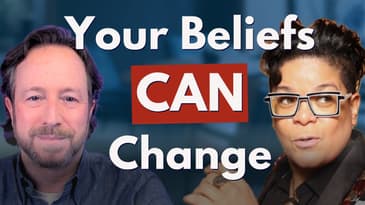
Your beliefs haven't caught up…yet. And the limiting beliefs you do have are impacting your personal development.
Our guest, Brooklyn Dicent, reveals why high-achievers stay stuck on their personal growth path even when they know exactly what they want. What they need is a shift in their mindset.
Brooklyn is an expert in activating people to shift their state. With recent speeches at TEDx and at the United Nations, she brings together the science of the subconscious mind and the practical tools of belief change to help high-achievers unlock the life they've always known is possible.
Brooklyn shows how the same mindset tools that built your current life can be reprogrammed, at the subconscious level, to build the one you actually want.
What You'll Discover:
• Why you will never outperform your beliefs, and how to change them
• How your thoughts quietly create your results, both positively and negatively
• What "theta state" is and why it's your brain's natural reprogramming window
• Why comfort is the real enemy of the life you want
• How to make SHIFT happen using the tools you already have
================
Recommended Next Videos to Watch:
- Take Back Control with Nervous System Regulation | Neuroscience Advisor Ashley Douglas https://www.youtube.com/watch?v=Yim5d8FO7Oo&list=PLbWfh34FP_dUcAaCrI31z00_fLdphi6b7&index=1&t=431s
- Jillian Waiting for All the Answers is Hurting Your Growth | Author Jillian Reilly #LeadershipDevelopment https://www.youtube.com/watch?v=VTLUz0JB2WE&list=PLbWfh34FP_dUcAaCrI31z00_fLdphi6b7&index=4
- Stop Hiding Your Truth | What's Possible When You Speak Up | Dr. Lalith Wijedoru https://www.youtube.com/watch?v=hfPdQUPB-Hc&list=PLbWfh34FP_dUcAaCrI31z00_fLdphi6b7&index=9
================
*** Don't miss another episode with amazing guests l- subscribe here: https://www.youtube.com/@WDYKTBT?sub_confirmation=1 ***
In this episode, Brooklyn answers the following questions:
• How to rewrite our limiting beliefs?
• How to get rid of limiting beliefs?
• How do I make a change in my beliefs?
• How do I get unstuck?
My favorite quote from the episode:
“The same tools that we have to create the life we currently have are available to create the life we want.”
Resources mentioned in the episode:
• Brooklyn’s LinkedIn: https://www.linkedin.com/in/brooklyndicent/
• Brooklyn’s Website: https://www.brooklyndicent.com/
• Brooklyn’s App: makeshifthappen.app
Chapters
0:00 Activating People to Shift Their Mindset
0:30 Introducing How Making Shift Happens
1:45 Welcome Brooklyn Dicent
2:37 Superpower of Activating People to Shift Their State
4:50 Embracing the Change You Want to See
7:20 Limiting and Liberating Beliefs
10:44 Brooklyn’s Path to Discovering Superpower
13:22 Discovering the Power of Beliefs through Neuroscience
18:08 How To Subconsciously Change Your Beliefs
23:43 Inspiration for Brooklyn’s Superpower
27:08 You Already Have The Tools You Need To Change Your Life
29:55 What Brooklyn Knows To Be True About Making Shift Happen
31:10 Making it Simple AND Easy To Shift Your Life
32:23 Becoming vs. Improving – You Are Not Deficient
35:56 Everyone Has Greatness Within Them – They Just Have to Choose it
39:02 Making the Decision to Shifting to Become More of Who You Are Supposed To Be
47:30 What’s Next: Write It Down, Make It Happen
48:37 Brooklyn at the UN – The Calling to Become Our Most Possible Selves
Music in this episode by Ian Kastner.
"What Do You Know To Be True?" is an invitation to be inspired to become more of your possible self by discovering your superpower, unlocking your potential, and creating your impact in the world.
This podcast is for leaders, coaches, org development practitioners, and anyone who works with people who want to be inspired to discover their superpower, unlock their possibilities, and make meaningful impact in the world.
For more info about the podcast or to check out more episodes, go to:
https://www.youtube.com/@WDYKTBT?sub_confirmation=1
"What Do You Know To Be True?" is hosted by Roger Kastner, is a production of Three Blue Pens, and is recorded on the ancestral lands of the Duwamish and Suquamish people.
To discover the ancestral lands of the indigenous people whose land you may be on, go to: https://native-land.ca/
Keywords
#limitingbeliefs #successmindset #personalgrowth, #personaldevelopment #subconsciousmind #selfconfidence #howtobuildconfidence #leadership #leadershipdevelopment #mindset
Transcripts - How to Overcome Limiting Beliefs with Brooklyn Dicent UN and TEDx Speaker
[Brooklyn]
In my short years of life, what I've determined is, is that we are here for purpose, with a purpose, and on purpose. So with that, know that anything that comes to your mind or your heart desires that you want to do, there's a reason why you specifically have this thought, this feeling, and this desire. It's because you're the one sort of chosen to bring it about.
So if you can think it, you can feel it, you can achieve it. Because look, it's your, it's your task, it's your job, your assignment, if you will. So let's get to, let's get to work.
[Roger]
Let’s get to work, indeed.
Tired of those old stories you’re telling yourself? The ones that keep you stuck and stagnant?
Well, today’s guest, Brooklyn Dicent, says the same system that created your limiting beliefs, also hold your liberation and everything you want.
You just need to make a different choice in how you use that system.
Becoming more of your possible self is yours for the choice.
Welcome to another meaningful conversation on What Do You Know To Be True? where we talk about what it takes to become more of our possible selves. I’m your host, Roger Kastner.
In this conversation you are going to hear Brooklyn share how you can shift into the person you want to be the tools necessary to make that shift -– spoiler alert –- you already have them, and the power to reframe your situation and choose an alternative possibility to the limiting beliefs that are holding you back.
If you are ready, let’s go!
Hey, Brooklyn, thank you for joining me today. I'm grateful that we're together, and I'm pumped for the conversation we're about to have.
[Brooklyn]
Thank you, Roger. It is great to be here, great to be on your show. I'm excited as well, but looking forward to it.
[Roger]
I'm excited to learn more about your superpower of activating people to shift their state. But before we get too far, what would you like us to know about you?
[Brooklyn]
I would say that one of the key things to know is that I'm here to help and to serve people the best way possible to help them, you know, achieve whatever they want to achieve in their life. Particularly, I'm usually called upon to speak to organizations and groups who are going through tremendous amount of change, especially recently, that's been the biggest thing called to help people manage change and transition in organizations or personally, and help them to get to the other side with some sense of hope and positivity, no matter what's going on for them.
[Roger]
Let's start with your superpower, because I think it goes to exactly what you're talking about, helping organizations get through whatever they're going through to get to that other side. Your superpower is activating people to shift their state. What does that mean to you?
And what does that look like when you're working with leaders and organizations?
[Brooklyn]
What that means to me is the ability to tap into a higher sense of possibility and probability within ourselves versus what's going on around us. And to give you an example, I am on calls on a daily basis with, you know, organizational leaders, C-suite leaders who are, you know, reaching out to me because they say, hey, here's a problem we're having. We have a particular change coming to our organization, and we've been trying to get people to get excited about it and to shift how they think and their mindset.
And it's interesting because when they come to me, they see these words, right? And we need to get them on the right track on their mindset. And we just don't know, you know, maybe we want you to come in and kind of energize people.
And oftentimes what I say is that it's not necessarily what's happening around you or outside of you. It's how are you showing up to those conversations? What's your level of thinking and feeling when you're showing up to those conversations, those change conversations or dealing with any kind of change in the organization.
But what matters most is how are people thinking and feeling in dealing with any kind of change event in the organization. And so when I talk about activating their state is to give them a way to reframe what's happening outside of themselves in a way that could benefit them. So all those things are, as I call them, reframing what's happening around you, not to minimize the challenge that you may have, but rather to recognize, wait a minute, how I'm thinking and feeling is going to have a direct impact on what I'm experiencing, you know, in my business or in my company or in my life, how I think and how I process will impact directly impact the results I'm getting.
And so I go through a process of helping people just shift that thinking. And it's as simple as just changing your mind. I always say, change your mind will change your life because if you change how you're thinking, it will change how you show up to things.
[Roger]
I love that and change management. We often talk about like the with them, what's in it for me, but we're thinking about that, not in terms of me, but the me out there, the people we're trying to convince. And what I'm hearing you say sounds a lot like, am I convinced?
Have I, have I seen the benefits for myself? And if I see those benefits, do I show up differently?
[Brooklyn]
So here's the thing we are hardwired to keep ourselves safe and protected, right? We all make sense as humans. We're designed to stay protected.
And oftentimes when we have change that happens, whether again, organizationally or in our lives, oftentimes what happens is we, the way that we perceive that change will impact how we approach it. So if we see the change as something that is a threat, or I don't have access to insights to, I don't know how to do the thing that I'm supposed to do. It signals to the brain, Oh, this is a threat.
We don't want any of this. Right? And so immediately we go into action to resist what's happening as a result of not knowing how not having, as I call it a roadmap to do the thing, the new thing.
And oftentimes for adults, it happens sometimes for young people, but definitely for adults, we go through this thing called learning anxiety, where if I've done a particular job, particular way for X number of years, and now you're telling me to change that, or there's a new system, I don't want to learn something new. And particularly not because I am lazy about it, but rather because I don't want to have to go through the embarrassment of making a mistake. Again, all these things are signals to the brain, there's a threat.
And so this is super unconscious, or you don't really realize it, or it seems like not a big deal, but the moment that the brain perceives something as a threat, something that I am going to do that I didn't know how to do, I'm uncomfortable with, we find ways to avoid it. We don't want to do it. We want to have it be the status quo, even if, here's an interesting thing, even if the change that you are facing, what you're going to have on the other side is better than what you have today, the going through the change, if it's perceived as a place of threat, we don't want to do it.
The nervous system kicks in, says, nope, let's figure out how to reduce the level of potential downfall or mistakes that may make, because who wants to make a mistake as an adult? Boy, that's a problem. And so we change that thinking, but it's amazing what happens when you do things you've never done, just to see what happens.
[Roger]
This reminds me the last time we got to speak with one another, you shared who you are, it's tied to your beliefs, and you're never going to surpass your beliefs. And so that makes so much sense, what you're sharing right now. If we believe this transformation or change is good for us and for us collectively, then we're probably going to show up with a whole different energy when we're working with other people as they're going through the shift as well.
[Brooklyn]
Absolutely. The thing that I constantly say is that, you will never outperform your beliefs. And I always say, I will bet your bottom dollar, show me how you will do something against what you believe is next to nearly impossible.
And not that you could forcibly try, but the bottom line is that that's how powerful beliefs are. And oftentimes we have beliefs that are deep-rooted, deep-seated, long-term, it's been there. And the brain doesn't have to do a lot of work when it comes to doing a particular thing it knows it can and cannot do.
Our brain's job is to conserve energy. It's to conserve energy. And if I know how to do something well, even if I don't like it, even if I have to go a long way around, but I've learned it and I don't have to think about it, it becomes automatic, then it's easier.
So then I started thinking, what would happen if you develop this being, this way of being that no matter what happens in your life, you just learn how to address it in a way that is easier, effortless, with no worry. But the first thing is learning to calm your nervous system. And part of it is literally my self-talk around, you know what?
This change is coming. And you know what? I don't know much about the new skill, the new thing that I do.
I don't know anything about it, but I know that I have the ability to learn. That comes easy. It comes naturally.
I don't have to struggle too much to learn something new. I'm a fast learner, in fact. In fact, I love learning new things.
And when you start picking up these kinds of thinking, what happens is that thinking will change the feeling you're having. And I constantly say in all my keynotes constantly is, the feeling is the secret. So what I have to do is change the feeling.
So, but Brooklyn, how do you change the feeling? If I feel terrible about this thing, I don't want it. Okay, it's all a feeling.
So I have to just imagine, use what I call the OGAI of our brain, our internal chat GPT, internal design mechanism, internal Disney, and imagine what would it be like on the other side of this thing? And not only that, but imagine yourself being able to learn something difficult in an easy way, which is also why I teach when people are trying to learn something or memorize something or study skills. Imagine it being easier, effortless, without a challenge.
Just imagine. And then what happens is the brain goes, oh, we've done this before, right? Because the brain, as you know, doesn't know the difference between fantasy and reality.
So just imagine. And when I discovered this bit, I tell you what, Roger, it changed everything because I'm like, why are we struggling? Why are we making it so hard for ourselves?
Right? And the minute you were in a place of struggle, it's a losing game. So I pause and I go, okay, how do we make this easy and effortless by imagining what it would be like on the other side?
[Roger]
What I'm getting curious about is the neuroscience backs everything you're saying. And I'm curious, did you discover these things first and then study the neuroscience, whether it's how we react to change or uncertainty, how the nervous system takes over or how we could regulate our own nervous system so we show up positively? What came first for Brooklyn?
Was it the lived experience and then the knowledge or was it more of a, you got your PhD in neuroscience and now you figured out how to apply it? Tell me a little bit about that story. Yeah.
[Brooklyn]
The origins story. Great question. So it's interesting.
It's a little bit of both. I've always been fascinated with psychology and the brain and how it works. In fact, when I was younger, I remember thinking, man, if I would have decided my career, what I would have gone into would be a neuropsychology.
I love neurology, love psychology. And I also earlier in my career was working with adults and kids with attention deficit and learning disabilities. And that began my interest to understand how the brain worked and how the brain learned.
And so in that process through obviously learning to get better at my job as a ADD, ADHD coach, I learned about neurology and I was fascinated. I'm like, wait a minute, how come we don't know about this neuroplasticity thing? How come we don't know that the brain can literally grow stronger?
How come we don't know this? So I continued my studies, but in the process also, I was, and always have been a comedian. I love comedy.
I became a comedian early in my career. And as I was learning comedy, again, because I'm a student of the brain, I realized that as I was learning the skills of a comedian, the skills that I was learning, I kept thinking people can really utilize the skills because what a comedian does ultimately is reframe a problem, right? From the problem to a punchline.
And that process of transforming the problem to a punchline is formidable. It is such a fun process because you have, it's a thinking process, but it's also a feeling process, which is why when you have your favorite comedians, you love your particular comedians because they relate to your life in some way, perhaps the deliveries when what they say and how they say it resonates with your emotions. And you love this person.
Then you probably will see him two, three times. One of my favorite of all times, of course, is Seinfeld. And I think I've seen Seinfeld live about three times.
And, um, you know, usually you, if you rose in, I want to see his thoughts. That's how close I want to be to this guy, but the perfectionism of an app, they have to be perfect, but the perfecting of the ability to take a simple or a problem that most people have coming problems and reframe them into something else. And some humor that is, you know, lends itself to creativity to see things you've never seen before.
And once a brain builds that muscle boy, I tell you what, there is no coming it is so fun. So in that process, I was one time doing a show, a comedy show. And one of the things about my style is that when I do shows and, and, uh, comedy is that I don't have jokes.
I actually, I stopped writing jokes. I felt that that process was a little bit kind of mundane in some way. I know it's weird, but what I found was I wanted to improvise in the moment.
And most comedians will never do this. It's not like you will. Yeah.
Get on stage is like, okay, let's see what happens here. That's what I loved. And once I picked up how my brain loves to operate, I'm like, okay, let's do that.
If that's what you like, let's go. Let's give it what you want. And so I remember I had a show, I think we had like a couple of hundred people.
This thing was sold out. It was really great. And in the middle of my show, I go, you know what guys I'm done with the jokes.
This is not what I want to do. What I want to do is I want to have a conversation with y'all. And we went in and it was so much fun.
I mean, literally people did not want to leave this building. It was great. So I continued doing this, this kind of thing.
And I called it comedy unscripted where I was just basically improvised based on the people in the room. And so I just play and just, you know, and also have a little bit of, of psychic ability. We all have psychic ability.
I do. And so I can pick up things. I can read a room.
I can read a person really well. And so one day I had a person up on stage cause I love being, bringing people on stage. And, um, she had a particular problem.
And the problem that she had was that she wanted to see her grandmother and her grandmother was ailing and she lived somewhere on, I think Ohio or something. And she couldn't get there. She didn't have a way to get there.
And so as I was working with her, uh, because I would consider myself like a comedy coach, people had a problem would come on stage and we'll work it through, through humor. I couldn't seem to get past her block of, she just could not get to her. Like there's just no way she could do it.
It's just not possible. And I keep trying to figure out how to get her on the other side of that thought. And I really didn't know how, and I, and right then I thought, you know what I need?
I need more training. I need to figure out how to bypass the brain's resistance mechanism, uh, which is called the prefrontal cortex. And it'll, it'll it's like the, I call it the bouncer of the brain.
And it's designed to push away any thought or any way of being that you're not familiar with. And so I went in and I got trained and looked for the top trainers in this space. And I became a certified clinical hypnotherapist.
And when I learned hypnosis and something else called neurolinguistic programming, NLP, it sealed the deal for understanding how the brain works and the facility by which we can make things happen in our lives. And so what it became, it came down to, it's a simple model. I call it T-Bear, T-Bear.
Basically it's, if you, if you, if you want a result in your life to change, we got to do the work backwards. If you want a particular result, say for a lot of people, it's, Oh, I want to, you know, reduce, reduce my weight. And the current result is that you are at a particular weight that you don't like, and you want to reduce that or in some cases, uh, gain more.
What I got to think about is what's my belief about. So the thought is I want to change, but what's my belief about that change for a lot of people changing is difficult. You see where I'm going?
Changing is difficult. I can't do it. I, you know, the minute I say I want to do something, all kinds of things appear, uh, cakes.
I don't know where parties, I don't know where, uh, all of a sudden 50 people have a birthday party after 10 with all this food and so forth and so forth. So, so the goal that you think you have in your mind, immediately things around you notice how that happens. People call it manifestation and it's just neurology.
You start noticing the world around you shift to the thing that you really want. So what's the, so the question is, what's the belief, the belief then creates an emotion. And for a lot of people, it's either fight, freeze or, or, um, fight, flight or freeze.
And so, or what do I want to do? How do I feel about this thing? And it'll create some sort of emotion.
That emotion then will create an action and it happens very quickly, right? So you have an emotion and all of a sudden you act and those actions create a result. That result will just confirm the belief.
And then you do this constant cycle, this constant cycle. So then I often ask people, what's something you want to change in your life? What's a part of you, a part of you in your life that you want to change?
Oh, you know what? I, I want to increase my business. I want to be whatever, whatever result they want to have.
What I go back is what is the common thinking and beliefs they have about that result? And what I find is that at the emotional level, they don't, they literally, the nervous system is like, nope, can't do it, not going to do it. And it will put up all kinds of resistance.
Like, all right, well then just imagine what would life be like if you did this thing, if you're able to accomplish, able to get to the weight that you want, uh, the job that you want, the relationship you want, what would it feel like? And also you see them light up, right? And that's what we're looking for is to change the feeling.
We change the feeling, you change the result. Maybe that's a long way around your question, but basically that's how it came from comedy and trying to help people change their lives.
[Roger]
That's a beautiful explanation of that. Cause you shared that with me the last time we spoke and I took on the assignment to try this. And there is a certain belief I had around my own podcast and I've been trying, well, I've been telling myself, what would it feel like when I have solved for this issue?
And I'm still in the middle of working through it, but I had the belief and an associated emotion with it that no, this isn't possible. And through working through this, it's now, okay, what's possible, not what's impossible. And it's changed how I perceive that thing.
[Brooklyn]
Oh, that's awesome. That's awesome. Well, you can fast forward.
Imagine doing it, being able to do it faster. The brain is constantly learning, constantly listening, constantly learning and our, and our time as, as humans on this planet, the time where we learned the fastest, the most, the quickest was right between ages zero to seven. We constantly being fed information and we're sponging that information.
The interesting thing is that that state of the, of the brain where that brain, the, the, the, the energy of the brain at that level where you're super, you know, we're babies was, was essentially known as theta state. It is the state that is just the subconscious mind is just capturing information, capturing information. Well, that state of the learn, I call it, let's say the, the, the learning brain or the fast learning brain that theta state happens every single night as you're falling asleep.
Every single night as you're falling asleep, we have, we, we, we cross between being alert to fall asleep through this passageway of absolute miracles. But most people, if you don't know about it, you don't know how to use that time of your sleep. So what do you do?
Well, since you're going from place of being complete alertness to sleep and you cross through this, this, this corridor of creativity as I call it, this corridor of creativity, you can program what it is that you want and you also create the feeling of it. So say for example, you say, okay, you know what I want? I want this podcast to be absolutely extraordinary.
I want great guests. I want great, you know, these are all the things I want. And then you start to imagine it and you start to, to say the words as if it already was a thing.
And this is where people call about, call upon it to be manifestation, but it actually is neurology. This is a crazy thing. So the fun thing.
So as you fall asleep, you go, I love my podcast. It's such a great podcast. I have great guests, great visibility.
People love it. People around the world, around the world. In fact, I got a call from this person from Germany, Germany, an email or call me or DM me.
And they said, you know, good taco, whatever they want to say in Germany and say, you know what, um, uh, we heard your podcast and boy, we want to, you know, we, we'd love to be a guest or whatever you literally, whatever you want, you design it as you're falling asleep or, or, or you tell yourself as you're falling asleep. The way I usually prep this is to say, to have clients be, you know, write it out or, or script it out before, obviously while you're awake, because then you can create, create the script that you want. Then you can do it one or two ways.
You can remember to do it or even better record your own voice, record your own voice on your phone and your audio and your recording device on your phone, record yourself saying what you want as if it already was in the present. Because what we're looking to do is to get the subconscious mind to say, this is what you've done it. We know how to do it.
We've experienced it before. And it's easy done because remember the brain will do whatever it can to conserve energy. So if it already feels like it's done it, it won't have to struggle to make the thing happen.
And you wake up the next morning, if possible, the next morning, just as you waking up, you go from another great corridor, you go from, from sleep to alpha, which is just that place between, I call it the, the dawning of, as you're waking up that, that moment, those first few seconds, usually, or first few minutes as you're waking up before you reach your phone and doom scroll through your phone is to remind yourself how grateful you are that you have the podcast that you wanted.
It's great. It's wonderful. And you wake up and off you go.
And we do this for, for now, you have to do this for a few nights. You know, I usually say about, you know, two weeks worth of, of time. It's a bucket.
It's a drop in the bucket towards what you want. And you just get into the habit of having these thoughts are happening before you go to, before you go to sleep. And as you're waking up, then the brain says, Oh, and then you start to notice that what happens is you start to notice that things, people experiences have to happen around you that feel like it's manifestation, but somehow you make decisions, small micro decisions.
They've led to these things. You see what I'm saying? So, and so most people like, Oh my gosh, but this person came out of nowhere.
Well, not really out of nowhere. There's something you did probably a year ago, two years ago, whatever. And all of a sudden you wake up and this person calls you or has a conversation with you.
And it's all because you've programmed your brain to believe you have a phenomenal, extraordinary podcast. So that's how you do it overnight. You do it faster.
You don't have to. And so change happens at an unconscious level. It's at an unconscious level.
You're not conscious about it. You don't have to start. If I'm, if I, for example, if I'm trying to make a change in my life and I'm struggling through it, I already know it's I'm losing.
I'm like, Oh wait, Oh wait, I forgot. This is not how you do it. You got to do it unconsciously.
[Roger]
I love that. I I've heard the advice of trying to make it fun, trying to make it playful. And yet you've made it so you could do it in your sleep.
How easy is that?
[Brooklyn]
You know, it's incredible. How easy is that?
[Roger]
I'm interested to go maybe to the beginning, or maybe it's somewhere here in the middle of your journey. What or who inspired you to have the superpower of activating people to shift their state?
[Brooklyn]
I want to say, well, first of all, I come from a long line of really just incredibly intelligent, insightful, intuitive, strong women in my, in my life, in my family. In fact, except for my brother and I, most everybody had their own business in some way. There were entrepreneurs, there were artists and so creatives.
And so really fortunate in that way, really privileged to have people like that in my life who were influences even early, early in my, in my life, even they, they, they were just examples. They were great examples. As I was growing up, I think probably my early teens, I had stumbled upon the, the information of like the likes of Tony Robbins and Les Brown and all those folks early, early.
And I thought, okay, great. So, so I want to start my own business. I want to do my own thing.
How do I do it? And who are the people? And I was just had the sense of joy for learning.
And so my family influenced me for sure early on. And then I kind of went on my own and started learning and studying the works of a lot of these great, you know, motivational speakers, but really they're behaviorists that they're like me, that they're, you know, behavioral scientists who are interested in, in, you know, human experience and also changing life and making, creating the life you want. So it started very early in, in, in my, in my childhood.
And I was always experimenting with ideas. It's crazy. I remember as a kid, I was, I want to say fifth, fifth grade, about fifth grade, fifth or sixth grade.
And, uh, where we were living in New York, our house was not too far from the school. I mean, literally I would go, I could go home for lunch kind of thing. And I was pretty much the only one in my class who went home for lunch.
And one day I was going home for lunch and I thought, I want a different day. Again, Roger, I don't know where these thoughts were coming from. I'm just the kind of kid.
I want a different day. I want a different second half of the day. And I think what I'm going to do is that I'm going to go home, shower, change and change clothes and just come back to the school with a whole new set of clothes.
The funny thing is my parents, probably because nobody questioned it. Nobody questioned what I was doing or why. And all of a sudden I come to school with a whole fresh, fresh outfit.
People like, like, like why? And I'm like, because I feel better. Don't know whether that was comfortable.
I just felt better. It was kind of fun. So I would do things that would typically not be the common thing that people do, but I'm like, I just want to feel better.
But also the other inspiration, to be honest, is the flip side. It's the people who don't succeed, people who are struggling in life. And I'm like, well, does it have to be this way?
Does it have to be this difficult? No, it doesn't. Well, how can we make it easier and faster and more comfortable?
The whole fact that humans believe that it has to be hard and uncomfortable and difficult to succeed or to do anything in life is just unconscionable to me. I'm like, there's got to be an easy way.
[Roger]
Oh, wow. So much in there. I love this idea at a very young age, you had the sense of agency, this belief that you could change your day.
And yeah, it took a little bit of a routine, but you, you had that agency where you could go home, where you could start the day over. You could hit, you know, hit the pause and reset button. And then the motivation of seeing other people who lack that knowledge, lack that belief that they can hit the restart.
And it's not always going to be as easy as just going home and starting the day over, but they have the control, the power to change what they can control.
[Brooklyn]
You do. The thing is that we all do, and we have it literally within us. And here's the bottom line, Roger, is that the same tools that we have to create the life we currently have, the same tools are available to create the life we want, right?
People think they have to do this extraordinary things externally outside of themselves, and they really don't. It's internally. And once you change your thinking, you will change how you, the filter of your world, because it's really not that difficult.
The other thing too, is that, you know, you were asking me, well, what helps you each day to stay sort of in this mindset? I think we talked about it before. So what can help?
I try, especially because of the world that we live in today is as much as possible, stay away from ridiculous, just nonsense, nonsense of news information. Honestly, I keep saying, if there's something I need to know that's going to impact my life immediately, I don't know. Somebody will let me know.
It'll come to my awareness. And it's not to say that I am avoiding or not looking at what's happening. I get it.
But there's only literally so much that your nervous system can handle and regulate. And from that standpoint, I have to protect it. And this is where I would say to your listeners is protect your mind, protect your nervous system, protect the information that comes in, protect your feed.
And I often say feed your feed, meaning your social media. It is designed for absolute addictive consumption. And so, you know, the scrolling business and just, because what happens is the creators of a lot of this media understand how the brain works.
Understand that there is bursts of dopamine that gets hit constantly, almost like eating cheese, like, oh my God, I can't get enough. And so you constantly have to go back to it. And if you notice how many times you reach for your phone within, you know, not even an hour, five minutes, it can be quite intoxicating.
You realize how much you depend on it. So what I try to do is, again, is regulate a lot of the technology around me, social media, et cetera, to the point where I'm like, if I am on it, you know, an hour, I'm like, what are the things I should be doing right now? What are some other things I should be doing right now?
If I have time to screen, I have time to sell. So, you know, get on the phone, do what I have to do, and what am I avoiding? So that's really important too, again, because people who do this kind of work in terms of media and so on, they understand how the brain works.
And like, if they understand it, we should understand it too. We should have the same access, the same tools, understanding how our brain works and then use it.
[Roger]
In this moment, Brooklyn, what do you know to be true about activating people to shift their state?
[Brooklyn]
Well, what I know to be true is that it's easy. It's really easy to do. In fact, we're experiencing it every single day outside of us, people shifting our states, right?
So I'm like, it's easy to do. That's the one thing I know to be true. You have the tools already available to you because you can think, you can feel.
You can think and you can feel. So you already have the tools available to you. And this is what I've learned just in my life, in my short years of life, what I've determined is that we are here for purpose, with a purpose, and on purpose.
So with that, know that anything that comes to your mind or your heart desires that you want to do, there's a reason why you specifically have this thought, this feeling, and this desire. It's because you're the one sort of chosen to bring it about. This is why people, some people have an inkitude about certain things because, look, it's your task, it's your job, it's your assignment, if you will.
So let's get to work. Life can be a lot easier and less stressful, less, I would say, bogged down than people make it to be. So if you can think it, you can feel it, you can achieve it.
[Roger]
Out of the 60 plus conversations I've had in this series, one of the themes that's popped up several times is we're talking about superpowers that are simple but not easy. You are the first person to say, that's simple and easy. I love that.
[Brooklyn]
And it really is. Yeah, it really is. And particularly because, like I said, my thinking was, how do we make this easy?
In fact, it was one time having a conversation with a coach that was hiring to do some work with. And I was introduced to this concept and this idea just banged around in my head around, it can be easy. It's that easy.
And if you're struggling, you're already losing. So I'm like, oh, okay. So yeah.
[Roger]
Yeah. There's something about when we tell ourselves it's hard, when we tell ourselves we need to improve, we're admitting to some some deficiency in us. Like it's hard because it's hard for us.
When we don't know this thing, or we don't have the skill, we need to improve in this area. We're saying we're lacking something today. And what I'm picking up from what you're sharing is this.
And this is something we've talked about a few times in this in the series around the idea of we're just becoming that thing. We might not be it yet, but we're becoming the acorn is becoming the oak tree. Not the acorn is a deficient oak tree.
And that's, that's coming up for me today of like, okay, does the oak, does the acorn struggle to become the oak tree? Or does it just need the basic thing? When we start making these things feel harder than they need to be, we might be efforting too much.
And we might be telling ourselves a story that does not really serve us and our goals.
[Brooklyn]
Absolutely. And I have two thoughts that come to mind. First, let's think of it like a week through concrete, a weed through concrete.
And the second is that we already built with the things that we need. So we do concrete. How often have you seen, you know, weed or even a flower bust through concrete?
It's his nature. It's already in his nature. And secondarily, how, how does it happen?
Think about when that happens and it happens often, whether that's a weed or a flower busting through concrete is because it's already in his nature. Acorn does not ask, how do I become a tree? What's a process?
You know, what kind of parents did I have and whether or not I'll become a tree, you become a tree. Now, is it better in certain circumstances? Sure.
Can it, can it, can it, you know, does it need all the things like, you know, the nutrients? Sure. Yes, absolutely.
But it's by design designed to be a tree. As humans, we're designed to be excellent. Our genetic makeup and our, the signs that, that courses through our veins is designed to self heal, to progress.
We're designed by design, by nature to be excellent. So it's already, we're already wired to it. And then along the way, somebody says, well, what if it's hard?
Oh yeah. What if it's hard? And the study that, um, uh, Dr. Dweck did right out of Stanford through the work of right. Um, mindset, she talks about this. He says, look, bottom line is that we can, as children we're trained and here's, I believe because I've seen it, you were trained to do one or two things. We're trained to give up faster or we trained to figure out how to do something, which is where she said, it's so simple.
If you don't know how to do something great, admit it. You don't know how to do it, but I don't know how to do it yet. The beauty of it is the brain loves to solve problems.
In fact, it's why we dream the brain solving through problems, sifting through emotions. That's really what dreams are is just a visual representation of the emotions trying to be solved by the brain. This is what's happening is why I love the brain so much.
It's so much that happens within it, that it's designed by, by nature to help us be excellent. The reason why we have dreams are not the reason why I have dreams, but the, the, what's happening in the dream is us exercising, uh, emotions, particularly emotions that are, are difficult, like not, I wouldn't say negative, but only resourceful emotions or going through trauma. You're having dreams because the brain is trying to get that out, to get the, to get you to move through that situation to the next place by design.
You don't ask yourself to dream. You just do right. You don't ask our heart to beat.
It just does. We're designed to be excellent. We just don't know.
We haven't been taught how to program it properly. That's all.
[Roger]
Hmm. What did you believe early on about your superpower that you've come to learn is not true?
[Brooklyn]
You know, I don't know if it's not true. I just know that not everybody believes it. I used to want to sort of shake people and go, did you know, did you know if somebody's Roger, somebody said to you, Roger, uh, if you go down to the next town over and to this particular, you know, building, and if you go to this lock box and the lock box, it has your name on it.
And when you open this lock box, there is literally everything you ever want. The question is, would you, would you go? Some people are like, oh yeah.
And then other people will be like, well, hold on. Right. And that well is experience.
And so we second guess, we doubt we don't, but, but yet there's this great thing. This lock box don't, but your, your one task is not to question it. It's just to go see what's in it.
Well, we have that lock box within ourselves. And so we question and we doubt we, we don't believe it. We don't whatever, because we haven't been taught.
And what happens is we're not taught to think ultimately what, what, what I've learned is that we're not taught to think. And so what I do in the work that I do is help people to think differently. If you learn how to think differently, everything you have, you have no choice, but everything changes around you.
The other day I was watching, um, this woman, uh, talk about algebra and break it down in such a way that I thought, how come somebody didn't teach it to me this way? This would have changed everything. And she's just teaching algebra to kids.
And I was learning by, I was watching this. She was teaching algebra by using the formula in a story format, because she did such a great job. But the point is, I was like, man, that would make sense.
And to the point where she was able to relate how algebra actually does help you in your life. She didn't say this bit, but I would add it. It's critical thinking.
And so, because most kids are like, oh, I've never used this. Why I'm, you know, two Y plus X, Y, Y I'll never use as well. What you're doing is critical thinking.
And so ultimately what I didn't believe, you know, was the thing was, it's shocking that most people don't believe they have this incredible lock box within them to achieve whatever they want, literally whatever you want. And that, you know, not everybody will, but most people won't realize just how much they can do by changing how they think. Plain and simple.
But, but also the interesting thing is you cannot do it. It's going to be odd. You can't do it consciously.
You can't be like, oh, I'm going to force myself to positive thing. No, because to me it was the whole, you know, positive or what is it? Toxic positivity is this rah, rah from external.
And that does, that does not work from the outside in. It does not work because we're programmed to be exactly how we decided to be. And so what we have to do is change that thought, change that decision to be, but you have to do it in a way that is easy and effortless.
And it happens literally overnight. It's the fact that the sad part is that most people won't believe this. They have an incredible lock box of greatness within them, but you have greatness within you.
I decided I wanted to be a speaker and I wanted to help people change their lives. Like since I was a kid, I knew this is what I wanted to be around 14, 15 years old. I'm like, this is what I want to do, but I got to do a couple of things.
I got to get old. And my favorite speaker has a beard and I'm like, I have to figure out how to grow a beard because people don't listen to people if they don't have a beard. And so anyway, and I ended up getting old, right?
So I'm like, all right, so now I'm old, let's do this thing. And I had been a speaker and building my speaking practice while also working full-time in my career. So my background is in human resources, L&D, sales training, like that's, I just love it.
In fact, I went from HR to L&D to then I really found my niche in sales training and enable it. And I had been working for great companies and great roles and so on, so forth. But in the last three years, my speaking business really was taking off.
And so one of the things that I was constantly grappling with is this sense of security and blah, blah, blah, supposedly security, and also this desire to help and do the things I do and help the world. And what I was grappling with was because I'd been doing it for so long that it started to feel comfortable. Like, oh, I can do both and why not?
Sometime at the middle of last year, part of my TEDx is about this, but in the middle of last year, at some point I decided that it was time to firmly move to the dream. Yes, this thing has some level of security and so on, but the energy that it takes to sustain that dual lifestyle, it's really unnecessary. It was just so much energy.
I'd find myself being sometimes on a stage in front of a couple of thousand people and the next day going to meetings to talk about things that are completely unrelated. And I was struggling with that. And it was an energetic struggle.
Remember I said to you, the moment you're struggling, you're failing. So I thought, if I don't better myself now, when am I going to do this? I know I look super young, but I'm halfway through this little experience.
So when am I going to do this? And so I had built out enough clients that I decided, okay, you know what, for this year, we're going to jump ship. We're going to do this thing full-time.
And I did. And I can't tell you how wonderful it's been. It's only two months into the year and so much has happened as a result of the context, the clients, the experiences, the potential.
And every time I'm engaged in my business, even in this podcast, I think to myself, how wonderful that this is where I get to focus on. How wonderful that this is the focus, that this is the thing. And yes, at first I was like, oh my gosh, I'm like, stop, relax the nervous system, recognize what's possible.
And then also recognize that you're from an FTE to an entrepreneur, the pace and the cadence is not the same. So the change is in my nervous system's expectation of what feels safe. Now it's, oh, you know, I may have a day when I have no meetings.
Am I great? So let's focus on administrative. Let's focus on the things that need to get done.
Let's focus on working, you know, on the business or in the business. Like just what's my focus. And just changing my frame of thinking of what I was to what I am now.
And I think that's for a lot of people who are in a corporate space right now, you know, they have a nine to five, you have a sense of a relaxedness because you don't have to worry about, hey, where's your income going to come from? But then I thought, wait a minute, I'm not employed by a company. I'm employed by the universe.
I'm employed by the planet. So, um, hello, there's tons of opportunity. And then waking up every day, this is another thought that was really got to me, waking up every day and realizing I can do whatever I want right now.
The freedom of that, the, the, the, the, this is a word in my first language is Spanish. Um, and so this is better word for just feeling the sense of, um, despejado, which is you, you release all the stress around certain things, realizing I can do whatever I want right now. And so when you go from being an FTE to, to an entrepreneur, um, that's what happens.
And now that transition has been pretty, pretty dope. And yes, there'll be other things that will come up. There'll be challenges I'm sure.
And there has been, but I'm like, okay, cool, cool, cool. How do we solve that? Well, what's our next thing?
Like, how do we, but, but, but the decision, and I think this is what it comes down to for everybody is, is that when you make a decision, the rest of it, that's going to come about would have never come about how you not make that decision. And you have to be at that defining moment that this, that moment of decision to decide, okay, it's time for me to do it. But for people like me, myself, who I consider myself at the time, uh, to be an, uh, I call myself a corporate preneur, which means you're in a corporate space, but you're really an entrepreneur.
It's to decide how to, and this is my advice is decide how you can do what you do on a part-time basis or as a side hustle until you can, you can grow it. Uh, when you've had what we call a proof of concept, people are booking you, people are looking for you, people are hiring and so on. And so for, for people who are listening to this, who are in the same place where they have a job and they're like, you know what?
I really have this other thing. Then it's, is there a way for you to build it on a part-time basis? For me, I use my PTO constantly.
So I, so for three years, I didn't have a real vacation. I would take my PTO and go do my thing. So throughout the year, if I have however many days in the year, I would go do my talk.
And usually when I have to travel the country, it is a couple of days. So day for travel, do the thing and then travel back and then be ready for day three to go back to my job. And so I was doing this for like I said, I actually did it for a lot longer, but for the last three, four years has been even, it picked up even more.
So I would use and manage my floating holidays, manage my PTO to let me do this thing. But again, I was very open about it because now I'm posting on LinkedIn and people are tagging me on things. And so I'm like, I live this life.
So whatever the thing you, people want to do, if there's a way for you to do it on a, like a side hustle, like I said, evenings, weekends, great. In my case, it was not evenings and weekends. I had regular day hours.
So I found a way to, to make that a bit of a sacrifice. You're here on purpose with a purpose and for a purpose. And if you have an inkitude, you have this idea, you have this thing that's been gnawing at you for a while.
You are the person to do it and let this be your sign.
[Roger]
As a person with a day job and two side hustles, I feel like you're speaking right to me.
[Brooklyn]
Right. And, and, and that's just, that's it. And here's the interesting thing about, about having a day job and then hustles is that then I have a business.
I'm like, well, what else do I want to do? So I now have what I'd call a portfolio of opportunities. There's things that I'm interested in that I also do.
I don't have to market all this and whatever else. I mean, I just have like these different lanes because, you know, what did the wealthy do? The wealthy have multiple streams of income.
I'm like, why are we putting all our eggs in that one basket? And it doesn't allow us to be as free and as open and, and open our mouths to do the thing we want to do. And if, and if, you know, you're like me and we are, you know, gifters of gab and we love to speak and talk to people and engage, there's things that are powerful.
When we are holding onto this other thing, it's just, it separates energetically. It's hard to move forward when you have both, you know, feet and, and on the gas and the pedal at the same time. You, you do what you have to do, but that you are on track to do the thing versus continuing to stay comfortable because what happens is, as you know, that the, the, um, the enemy of success is comfort.
It's easy to be comfortable. It's my God. Yeah.
Remember, because the, the, the, the, the, the subconscious mind, if it's going to find the easiest way, easiest path, and it will do everything in its power to make you fear doubt, worry, all these things, all these thoughts, you can't sleep. It's doing its job. And that is a huge sign of the old self dying.
Like it doesn't, it's going to hold on to for dear life. And once I started to do identity work and understand how this works, even through, through hypnosis and behavioral science is understanding that you will hang on to who you believe you are to dear life. And what we have to do is change the identity.
Your psyche is designed to hold on to what you've become because it's safe. Even if that thing you become is not great. Like, you know, you are the head of a mob or something.
It's not great, but it's what you've become. It will hold on to that identity for it, for dear life.
[Roger]
So what's next for you and your superpower of activating people to shift their state?
[Brooklyn]
So I had his interest because I had three, a three-step like life goal or not even a goal, a life plan. I'm like, okay, first of all, I want to write a book and we did. And this is three things.
So I want to write a book. I want to do a TEDx and I want to be on Netflix to share this message. And I wrote it down and I said, Oh, remember you can make anything happen.
If you write it down, make it happen. By the way, there's a whole phenomenal book by a woman named Henry Clouser. I can't stress enough how, how great this book is.
And it's called write it down, make it happen. This book is, is life changing because when you understand the power of writing things down and it's not just the writing things down is because believe it or not, when you writing things down, your fingers are connected neurologically to your subconscious mind. So you are literally programming what you want.
I'll leave it at that for a while. I'm like, I don't really need to read books. I just want to do what the title says.
I don't need 300 pages to do what the title says. So write it down, make it happen, done. And, but it's a great book.
In a few weeks, I'm going to be going to the UN to speak on this topic. I know it came, it came right after my TEDx, which my text has not been published yet. It's literally going to be published in the next few months, more months for this, but I'm waiting for it.
Yeah. Yeah. It's going to be published in a few months.
Who knows? And we're, we're, we're tracking and trying to figure out when that happens through that. I met some, some folks and who then said, Hey, we have this opportunity.
Would you be interested? I'm like, uh, why are you asking me? The answer is give me the date and we're there.
And so we're going to be, uh, being, uh, speaking at the UN, uh, to world leaders around this, this concept of what I call, um, still standing, which is basically no matter what's happening around you in your life, how do you, what do you got to do to stay standing in your life? And I've had all kinds of things happen in my life, but I'm like, I'm still standing, be able to take this message, you know, um, to a, I would say global stage is next and ultimately just impact and help as many people as I can to live the life they really, really want. Uh, I think the, another thing transitioning for me is I really want to help people who want to, uh, break out and do their own thing, literally their own business versus like, Oh, I have to, you know, work for a company and working for a company is great for a while, but ultimately there's so many people that have a strong desire and dream to do something else.
And not just anything else. There's something that is their, their calling. And that calling has come from literally childhood and it's they were designed to heal something, improve something.
And through that, there is this calling sort of, there's been writing as I call it in the background as software, right? It's in the background, there's a little whisper of something. And I want to inspire more people to do that, to, to take the leap, to take the leap, to do the thing they want to do.
Even if they do it, you know, as a side hustle for a little while and, you know, do it on the nights and weekends, um, while they have a regular job, but eventually break out and do this thing that you're meant to do. That's really what's next for me. Um, inspire more people to do that.
And not everybody's designed to be an entrepreneur. I get it. Uh, but in the meantime, how else can you bring to life those dreams that you have that by the time you get to this big lot, it's funny cause I don't, I don't know that I've ever seen a graveyard be built, but they're there.
Everyone knows that? Anyway, um, it's just there. I don't know who put them there, but they're just there.
Uh, you know, there's so many dreams that were unfulfilled and I'm like, find a way to make your dream come true.
[Roger]
We, we have this in common. Um, this is the basis of the podcast. It's talking to people who are living into their superpower, who've already discovered their purpose, um, and taking their experiences and sharing them with other people who are beginning their journey or middle of their journey and either want to be inspired, um, or learn the paths that other people took to live more fully into who they were meant to become.
[Brooklyn]
Yeah.
[Roger]
Yeah. No, that's, that's amazing. If an audience member wanted to follow you or ask you a question, where do you want to point them to?
[Brooklyn]
So name like is on the screen there, Brooklyn descent. You can find me on there, uh, and LinkedIn, which is probably the easiest way. Right.
So LinkedIn, Brooklyn descent, uh, on LinkedIn, you can also find me at Brooklyn descent.com. And so, but the easiest way is definitely LinkedIn. Shoot me a DM and say, Hey, I saw your Rogers, uh, podcast, follow up questions.
Let's go.
[Roger]
Uh, more than happy to, and your app, where can people find your app?
[Brooklyn]
Yes. Good question. So the app is called make shift, happen.app, make shift, happen.app. And it's designed to help people change their really change their thinking overnight. And what it does is that it, um, and there's a free option. There's a paid option. There's a free option.
And what it does is that it helps you to identify the beliefs that are currently holding you're holding onto that you might not be aware of. Uh, it had, I literally created an app that had everything that I would want to help me create change. And as I w I am constantly continuing to develop it as well.
Uh, but it's called, cause I always say make shift happen. Right. I actually learned that in a, on a flight one day in Southwest is like, watch things overhead because shift happens.
And I'm like, this is so true. So make shift happen.app APP.
[Roger]
Fantastic Brooklyn. Thank you so much for being here today. Thank you for what you're bringing to the world, because I do, I do believe that, you know, we are meant for excellence.
We are meant to do great things in service of other people and lead meaningful lives for ourselves and the wonderful impact it has on others. And you've talked about ways that we can actually get better at that and being, becoming more of who we're meant to be. So thank you for being here.
Thank you for sharing this wisdom with us. And thank you for the work you're doing in this world. You're making this place a better place for all of us.
[Brooklyn]
You're welcome. My pleasure. Thank you for having me on your podcast and sharing this message with the world.
Thank you so much.
[Roger]
Awesome. Take care. Bye-bye.